
Creating your own holiday decor adds a personal touch to the season. This guide covers a range of crochet Christmas ideas, from small ornaments to larger home accents, helping you find projects that match your current skill level.
Disclosure: This article was drafted with the help of AI tools. Images are AI-generated illustrations.
When choosing a project, consider the time you have and the look you want. Some designs rely on simple stitches for a clean appearance, while others use textured techniques to create a more detailed, festive feel.
Key Takeaways:
- Match your yarn choice to the project's intended use.
- Use a gauge swatch to ensure consistent project sizing.
- Follow yarn label instructions for washing and drying.
- Choose simple designs for fast, beginner-friendly holiday gifts.
- Verify the construction method in your chosen pattern.
Table of Contents
Quick Reference: Styles at a Glance
| Style | Look | Main technique | What to check |
|---|---|---|---|
| Puff Stitch Snowflake | Bumpy and textured | Puff stitch | Closing the puffs |
| Ribbed Stocking | Raised ridges | Back loop only | Cuff construction |
| Shell Stitch Garland | Scalloped edges | Shell stitch | Skipped stitch count |
| Lace Mesh Tree Skirt | Open and light | Lace/mesh | Chain space size |
| Tapestry Reindeer | Firm and detailed | Tapestry crochet | Color change method |
| Snowflake Granny Square Coaster | Classic square | Granny squares | Joining method |
| Double Crochet Candy Cane | Striped and sturdy | Visual style only | Curve shaping |
| Whip-Stitched Gingerbread | Plush and soft | Visual style only | Seam security |
| Slip Stitch Join Wreath | Circular and rigid | Slip stitch join | Ring diameter |
| Single Crochet Topper | Dense and clean | Visual style only | Structural support |
What Yarn Works Best for Christmas Projects?
The right yarn depends on whether the item is for decoration or daily use. Different fibers offer different looks and care requirements. All stitch names used in these suggestions follow standard US crochet terms.
At a Glance:
- Cotton for structured shapes
- Acrylic for easy washing
- Wool for traditional textures
- Bamboo for soft drape
Cotton is breathable and does not stretch, making it a common choice for structured ornaments. Acrylic is widely washable and easy to care for, which is helpful for items that may be handled often. Wool provides a traditional look but can shrink if washed in hot water, while bamboo offers a soft, drapey quality.
Always check the yarn label for the recommended hook size. You can adjust the hook size up or down to change the feel of the fabric.
Yarn Selection Tips:
- Check the label for fiber content
- Verify the recommended hook size
- Choose colors that suit your holiday theme
- Test a small amount for softness
Pro Tip: Work a gauge swatch to see how the stitch looks in your chosen yarn.
Festive Crochet Christmas Projects to Try
These ideas are organized by the techniques they use, ranging from simple basic stitches to more textured options, allowing you to choose a project that matches your skill level.
1. Puff Stitch Snowflake
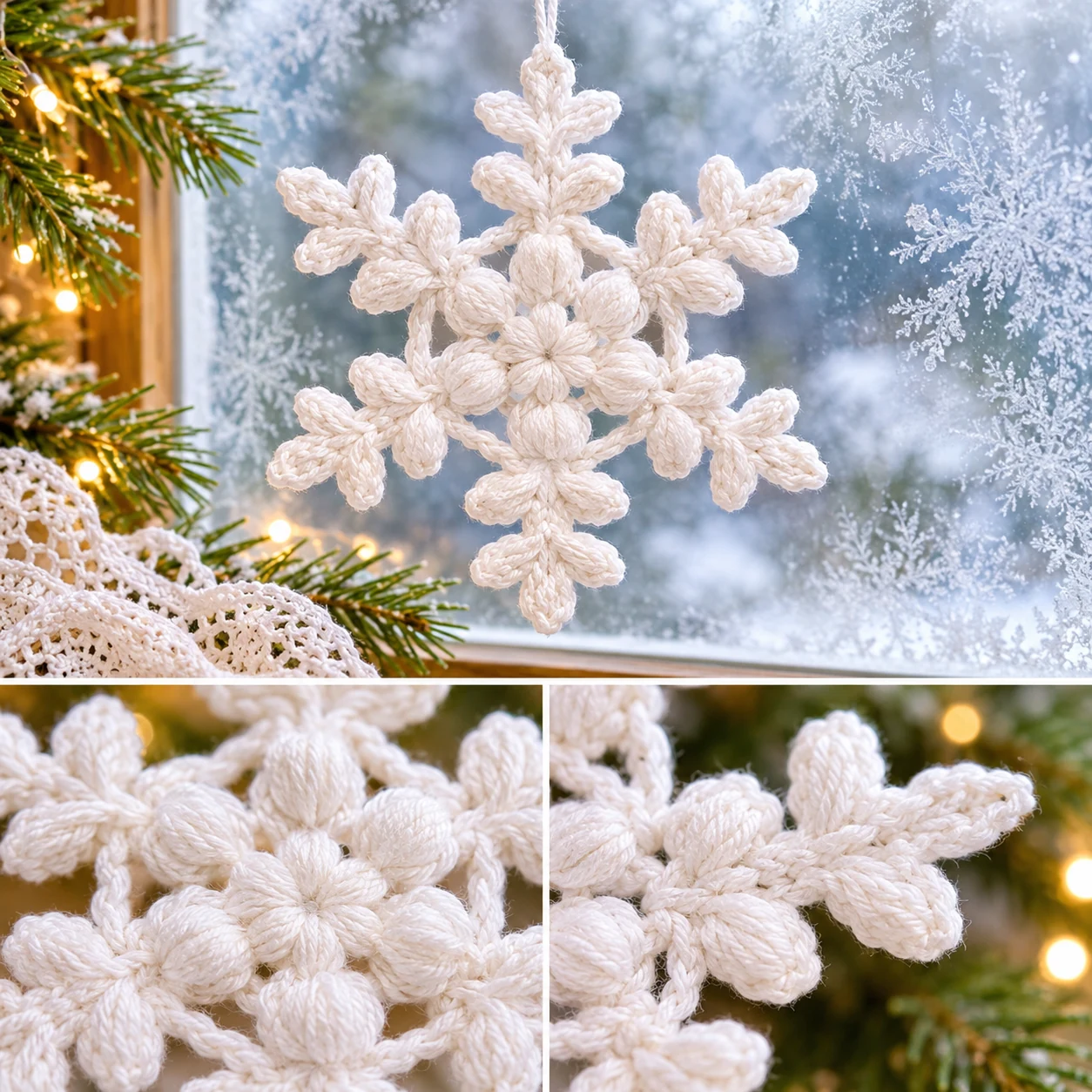
This delicate ornament features a radial design in soft snow white. The puff stitch creates a bumpy, soft texture that mimics the depth of a real snowflake, giving the piece a three-dimensional quality.
Because puff stitches involve pulling up several loops in one stitch before closing them with a chain, they use more yarn than standard stitches. This results in a thicker fabric that stands out clearly against the branches of a Christmas tree.
When selecting a pattern for this project, check how the center is started and how the points are formed. Beginners should look for clear instructions on closing the puff stitches to ensure the snowflake maintains its geometric shape.
Cotton yarn often works well for snowflakes because it lacks stretch. This helps the ornament maintain its crisp points and prevents the radial design from sagging or distorting over time.
The visual impact of the puff stitch is its primary appeal here. The contrast between the dense puffs and the open spaces of the radial design creates a professional look that resembles intricate lace.
2. Back Loop Only Ribbed Stocking

A traditional Christmas stocking in classic Christmas red often features a ribbed cuff. Using back loop only (BLO) single crochet creates raised ridges that resemble knit ribbing, adding a classic texture to the top of the stocking.
The BLO technique produces a stretchy fabric. In a stocking cuff, this stretch allows the item to expand to fit over various sizes of gifts while returning to its original shape once the gifts are removed.
Since the stretch in BLO rows runs along the row, the foundation chain determines the length of the band. Check your pattern to see if the cuff is worked flat and then joined, or worked in the round.
Acrylic yarn can suit this project because it is easy-care and washable. This is practical for stockings that may be placed on a fireplace hearth where they can collect dust or soot over the holiday season.
When choosing a pattern, verify how the heel and toe are constructed. These areas require different stitch placements than the ribbed cuff to create the necessary 3D shape for a foot.
Construction Check:
- Check if the cuff is worked flat
- Verify the heel construction method
- Confirm the toe joining technique
3. Shell Stitch Christmas Garland
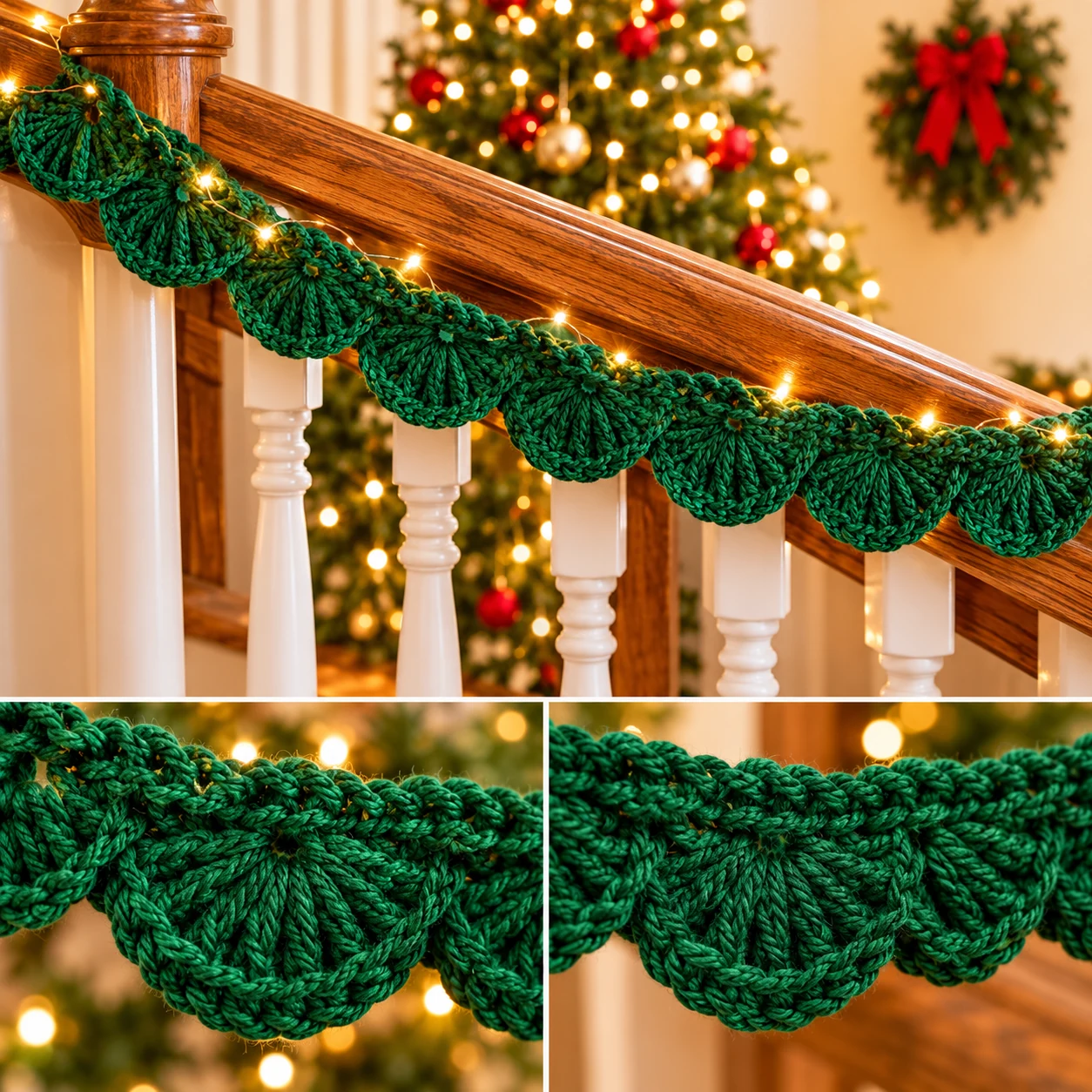
This festive garland in deep evergreen green uses the shell stitch to create a scalloped edge. A shell is formed by working several double crochets into the same stitch or space, creating a rounded, petal-like appearance.
To keep the fabric flat, shell stitches commonly skip two stitches on each side. This creates a rhythmic, wavy pattern that looks beautiful when draped over a mantel, railing, or around the Christmas tree.
When choosing a yarn, consider the weight and fiber. A heavier yarn will make the garland hang straighter, while a lighter yarn may cause the scalloped edges to curl more, creating a different visual effect.
Beginners should be careful to count their skipped stitches accurately. Skipping too many or too few stitches will change the shape of the shell and alter the overall length and drape of the garland.
The shell stitch is an excellent way to add volume to a garland without adding excessive weight. This makes it a distinct choice compared to a simple chain or single crochet strip.
4. Lace Mesh Tree Skirt
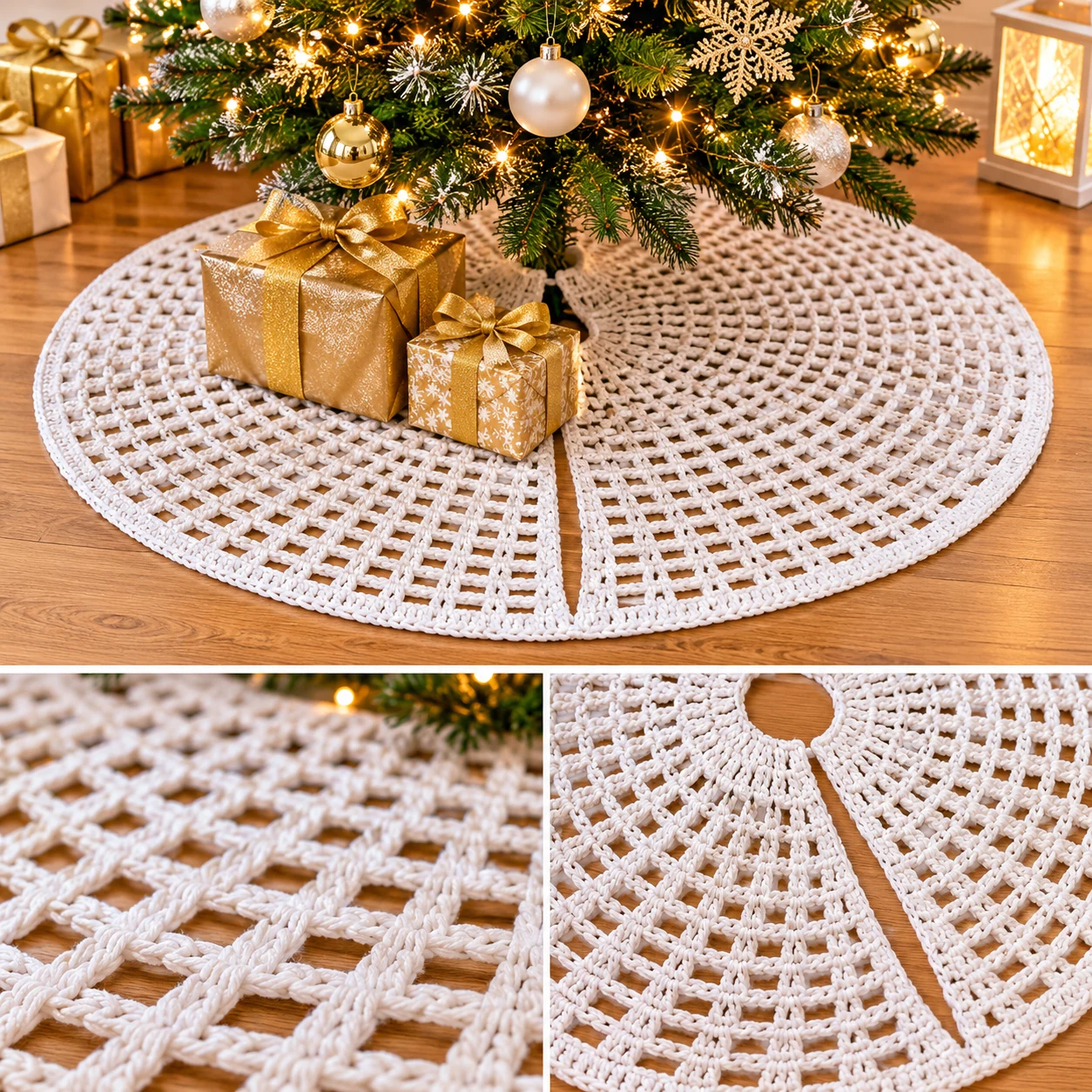
A tree skirt in soft snow white provides a clean base for a Christmas tree. The lace or mesh effect is created by alternating double crochet with chain spaces and skipped stitches.
This technique results in an open, lighter fabric. This prevents the skirt from looking too heavy or bulky around the base of the tree, allowing the colors of the tree stand to remain partially visible.
Check your pattern for the size of the chain spaces. If the gaps are too large, the fabric may look sloppy or lose its circular shape, which can affect how the skirt lays flat on the floor.
Bamboo yarn can suit this design because it is drapey. This allows the skirt to flow smoothly around the tree stand and creates a soft, elegant fold in the fabric.
Unlike a solid crochet circle, the mesh construction allows the fabric to expand more easily. This makes it simpler to fit around different tree stand diameters without the fabric bunching.
5. Tapestry Crochet Reindeer Ornament
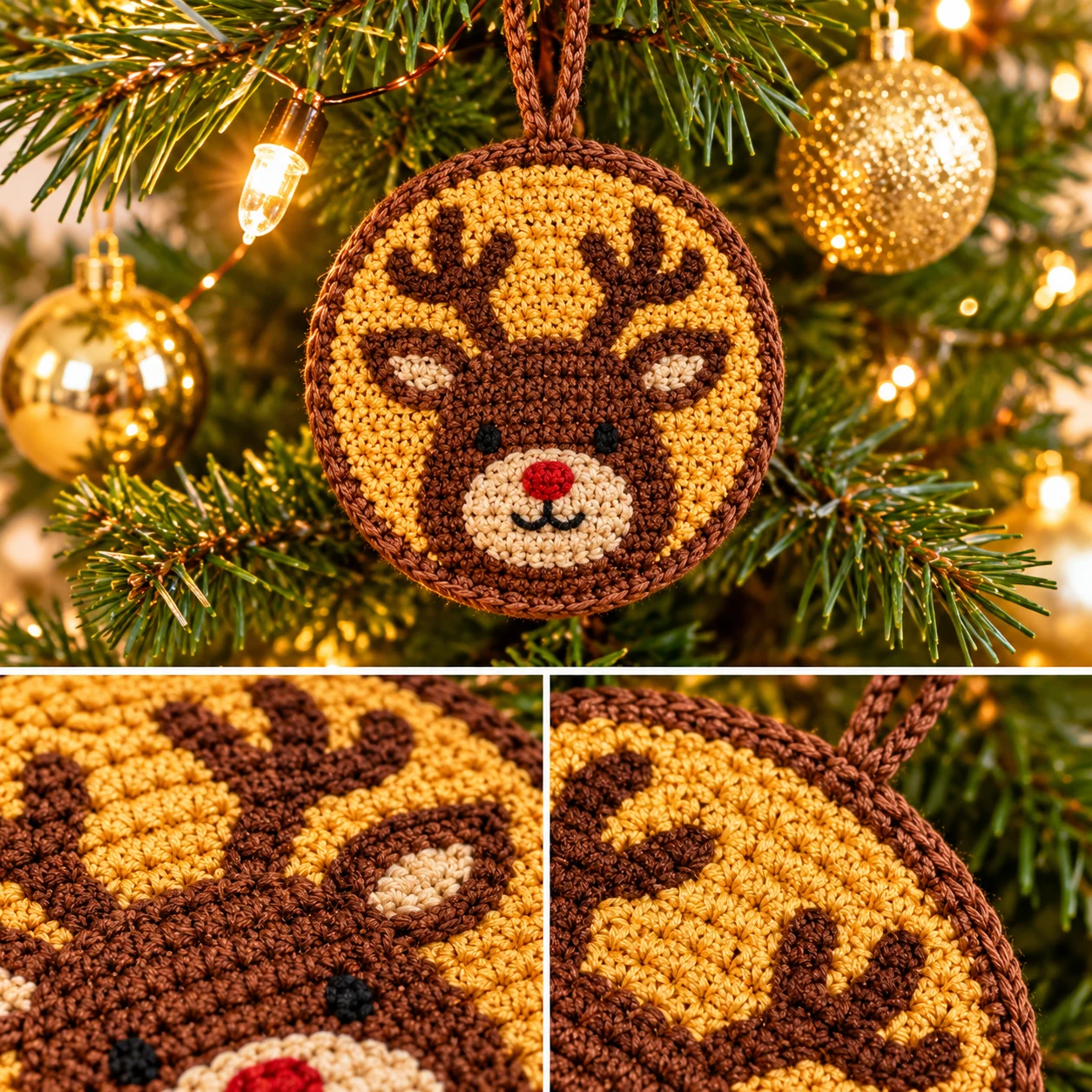
This small ornament in warm gold and brown uses tapestry crochet to create a reindeer motif. This technique involves carrying the unused color inside the stitches so both colors are present in every row.
Tapestry crochet results in a thicker, firmer fabric with less stretch than single-color work. This makes it a good choice for small figures that need to hold a specific shape without sagging.
Because the fabric is firmer, it provides a stable base for the reindeer's features. Ensure you carry the yarn loosely to avoid pulling the fabric tight, which could distort the reindeer image.
When picking a pattern, check how the colors are swapped. Consistent color changes and tension are key to making the reindeer motif look clear, sharp, and recognizable.
This project differs from standard amigurumi because the image is built into the fabric itself. This creates a flat, graphic look that is ideal for two-dimensional ornaments.
Tapestry Tips:
- Carry yarn loosely
- Check color change placement
- Maintain consistent tension
6. Snowflake Granny Square Coaster

These coasters feature a traditional granny square design in classic Christmas red and green, with a snowflake motif in the center. They are worked in rounds starting from a center ring, expanding outward into a square shape.
The granny square is a foundational technique that creates a dense yet flexible fabric. These make practical gifts for holding holiday mugs and protecting surfaces from heat.
To finish the edges, you can join multiple squares using a slip stitch or a sewn seam to create a larger mat. For a single coaster, a simple border is usually sufficient to keep the edges neat.
Cotton yarn is often suggested for coasters because it is breathable and does not stretch. This helps the coaster stay flat on a table and prevents it from warping when it gets damp.
When choosing a pattern, check if the square is worked in a traditional cluster or a solid style. This will determine how much of the table surface is covered and the overall thickness of the coaster.
7. Double Crochet Candy Cane
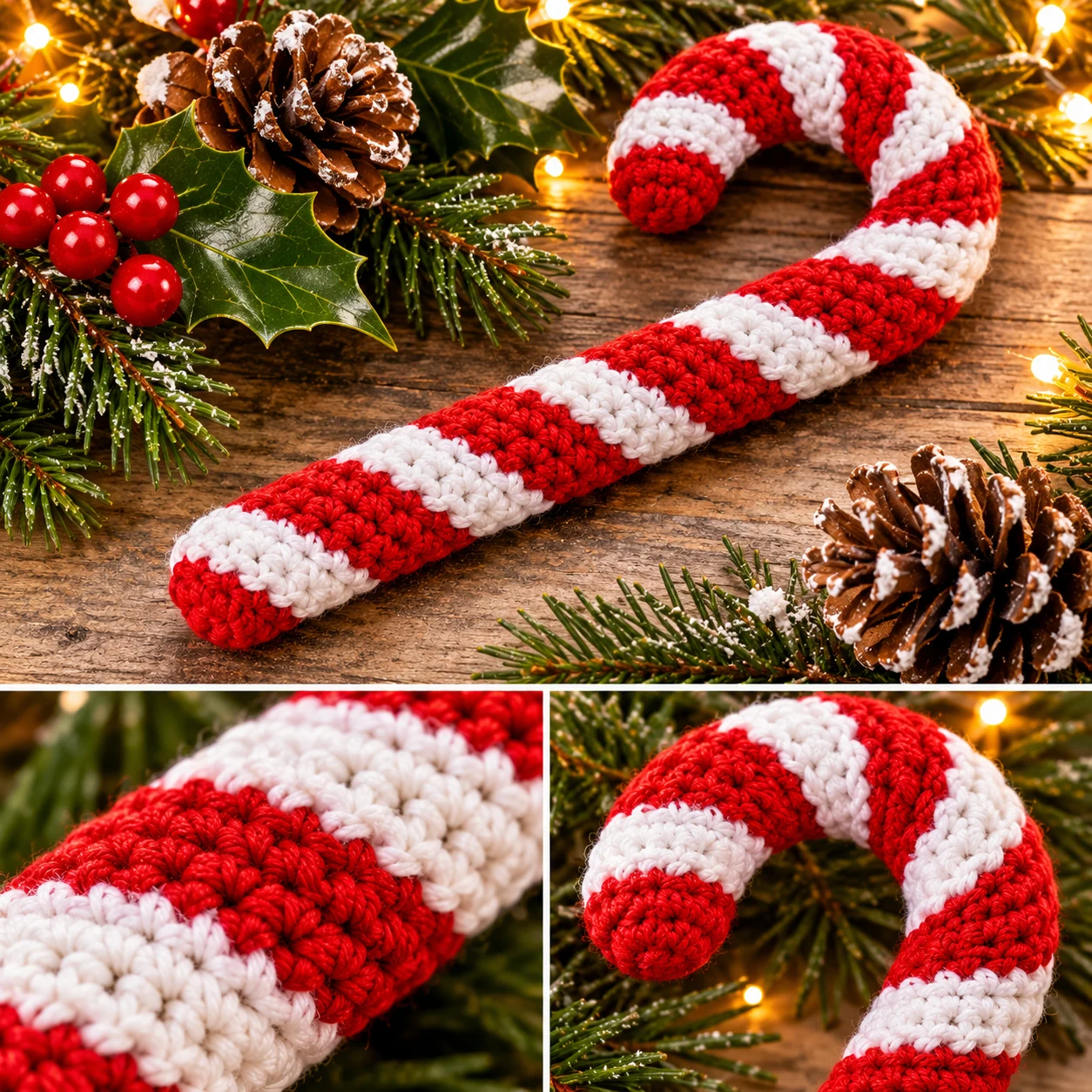
This playful ornament uses alternating red and white yarn to create a candy cane shape. The body is primarily worked using double crochet, which provides a balanced height and thickness.
Double crochet creates a fabric that is taller than single crochet. This allows the candy cane to grow in length quickly while remaining sturdy enough to hold its curved shape.
When changing colors for the stripes, a slip stitch join is often used. This leaves a small ridge at the color transition, which adds a subtle, tactile texture to the stripes.
Check your pattern for how the curve of the cane is achieved. This is typically done by placing more stitches on one side of the piece than the other to create the bend.
To keep the candy cane from flopping, you can check if the pattern suggests a tighter tension or a specific yarn weight. A firmer fabric is essential for maintaining the iconic hook shape.
8. Whip-Stitched Gingerbread Man
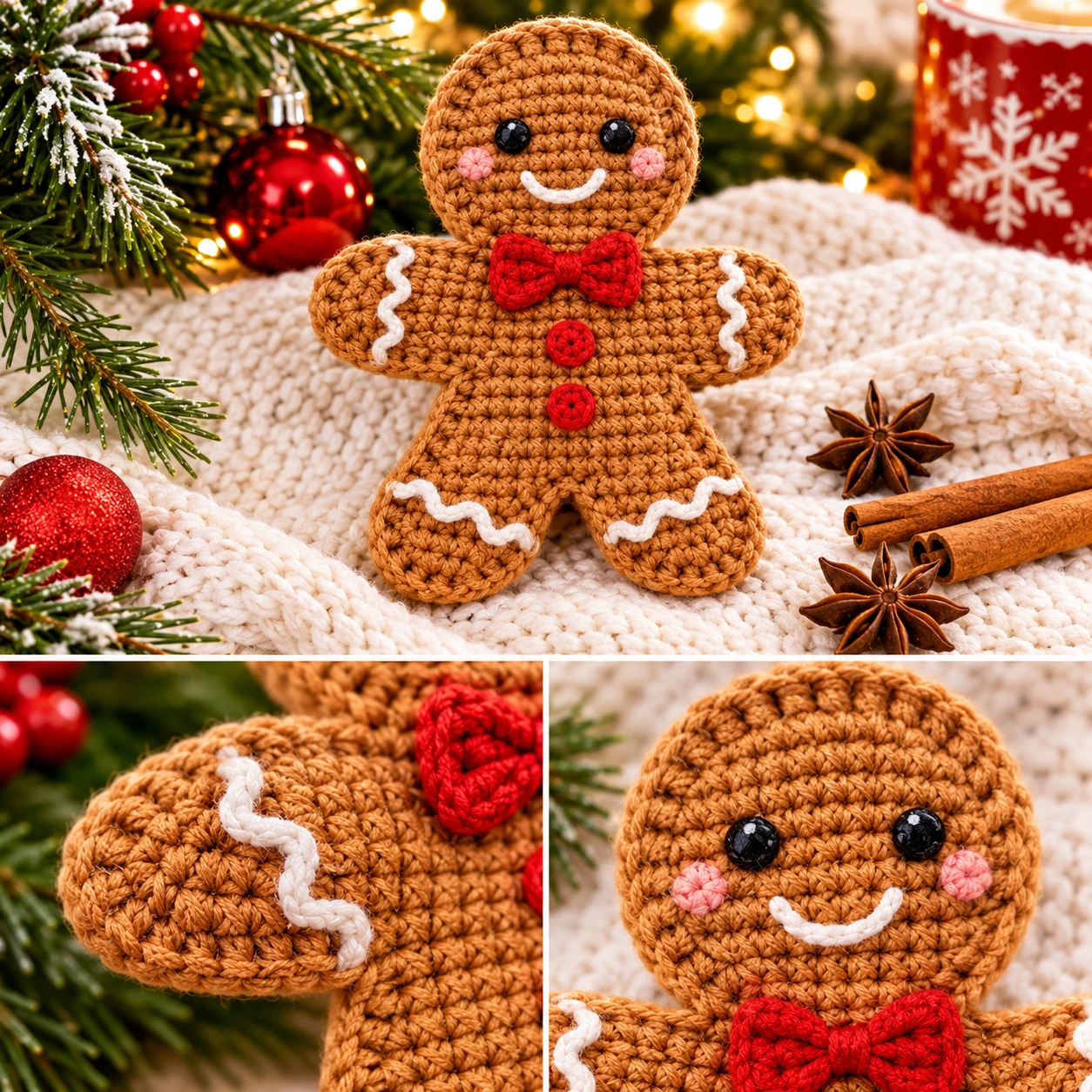
A gingerbread man in a warm tan color is often made from two flat pieces. These pieces are then joined using a whip-stitched seam with a yarn needle to create a 3D figure.
Whip-stitching allows you to join the edges securely while leaving room for stuffing. This creates a soft, plush figure suitable for holiday decorating or as a small gift.
It is important to weave in every end for several stitches, back and forth. This prevents the seams from opening when the figure is handled or squeezed.
Acrylic yarn works well for this project because it is easy to wash. This is helpful if the gingerbread man is used as a toy by children during the holiday season.
Unlike projects worked in the round, this construction allows you to focus on the flat shape first. Check your pattern to ensure the two pieces are identical mirrors of each other for a symmetrical figure.
Finishing Steps:
- Align edges carefully
- Keep stitches even
- Weave in all ends securely
9. Slip Stitch Join Christmas Wreath
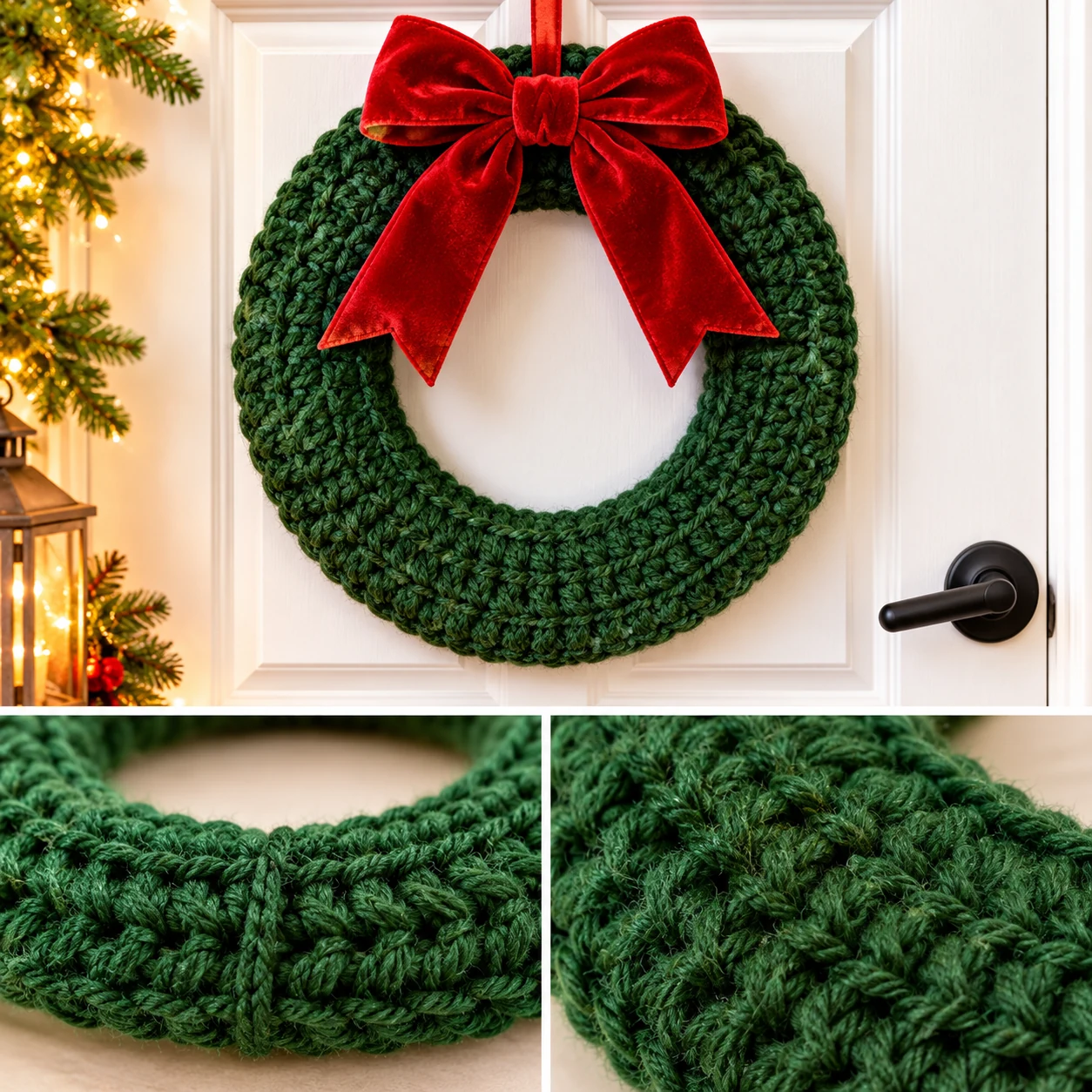
This festive wreath in deep evergreen green is often made by joining several sections together. A slip stitch join is used to connect the ends and create a continuous circle.
The slip stitch join leaves a small ridge, which can add a decorative, handmade look to the structural ring of the wreath, distinguishing the join from the rest of the fabric.
Because a wreath is a rigid construction, it has very little stretch. Ensure your measurements are accurate before joining the ends to achieve the desired diameter for your door or wall.
Wool yarn can suit this project for a traditional, rustic look. Be mindful of the yarn label when cleaning the wreath to avoid shrinking the fibers in hot water.
When selecting a pattern, check how the wreath is supported. Some designs use a crochet ring, while others rely on the stiffness of the stitches to maintain the circular shape.
10. Single Crochet Christmas Tree Topper
A star-shaped tree topper in warm gold is often worked with simple single crochet. This creates a dense, sturdy fabric that helps the topper hold its shape at the peak of the tree.
Single crochet is a basic stitch that provides a clean, uniform look. It is an excellent choice for beginners who want a project with a consistent texture and minimal gaps.
To ensure the topper stays upright and does not droop, check if the pattern suggests using a specific yarn weight or adding a stiffening element to the center.
Cotton yarn is a good choice here because it lacks stretch. This ensures the star does not sag under its own weight or lose its points over time.
The simplicity of the single crochet allows the gold color and the star shape to be the main focus. This makes it a timeless design that fits various tree styles.
How Do I Care for My Christmas Crochet?
Proper care ensures your holiday decorations last for many years. Always refer to the yarn label first for specific instructions.
At a Glance:
- Follow the yarn label first
- Avoid high heat
- Lay flat to dry
- Check for loose threads
Avoid using hot water or high dryer heat, as these can shrink cotton and wool or damage acrylic fibers. Laying items flat to dry is the best way to keep their original shape.
Regularly check your finished items for loose threads or snagged fibers. If you notice a loose end, weave it back into the fabric using a yarn needle.
Common Beginner Mistakes
Starting your first holiday project can be exciting, but a few common errors often occur. Recognizing these early helps you improve your results.
At a Glance:
- Inconsistent tension
- Skipping stitches
- Incorrect turning chains
- Forgetting to weave in ends
Tension is a frequent challenge; holding the yarn too tightly can make the fabric stiff and difficult to work into. Conversely, too loose a tension can make the project look sloppy.
Mistakes to Avoid:
- Counting stitches every few rows
- Using a hook size that does not match the yarn
- Ignoring the gauge swatch
- Pulling the yarn too tight in tapestry work
Building Your Holiday Skills
Moving from simple to complex projects is a great way to learn. Start with a single crochet project and gradually try textures like the puff or shell stitch.
At a Glance:
- Start with basic stitches
- Practice new textures
- Use tested patterns
- Keep a crochet journal
This guide provides an overview of styles and techniques. For exact stitch counts, sizing, and assembly, you should follow a complete, tested pattern.
Frequently Asked Questions
How do I know which hook size to use for my project?
Check the yarn label for the manufacturer's recommended hook size. You can then adjust the size up or down depending on how tight or loose you want the fabric.
Why is my crochet snowflake curling at the edges?
Curling often happens if the tension is too tight or if the stitch count is incorrect. Check your pattern and try using a larger hook.
What is the difference between a slip stitch join and a whip-stitch?
A slip stitch join is done with a crochet hook and leaves a small ridge. A whip-stitch is done with a yarn needle and is used to sew two edges together.
Can I wash my crochet ornaments in a machine?
Check the yarn label first. Acrylic is generally machine washable, but wool and cotton may shrink or lose shape if washed in hot water.
How do I stop my tapestry crochet from looking pulled?
Carry the unused yarn loosely inside your stitches. If you pull it too tight, the fabric will bunch and the motif may look distorted.
What should I do if my project is too small?
Work a gauge swatch before starting. If the finished item is too small, you may need to use a larger hook or a heavier weight yarn.
Final Thoughts on Christmas Crochet
Crocheting your own Christmas decorations is a rewarding way to celebrate the season. Whether you make a simple star or a complex tapestry ornament, these items bring a handmade feel to your home.
Remember to choose your materials based on the yarn label and the intended use of the project. By focusing on one technique at a time, you can build your skills while creating festive gifts.