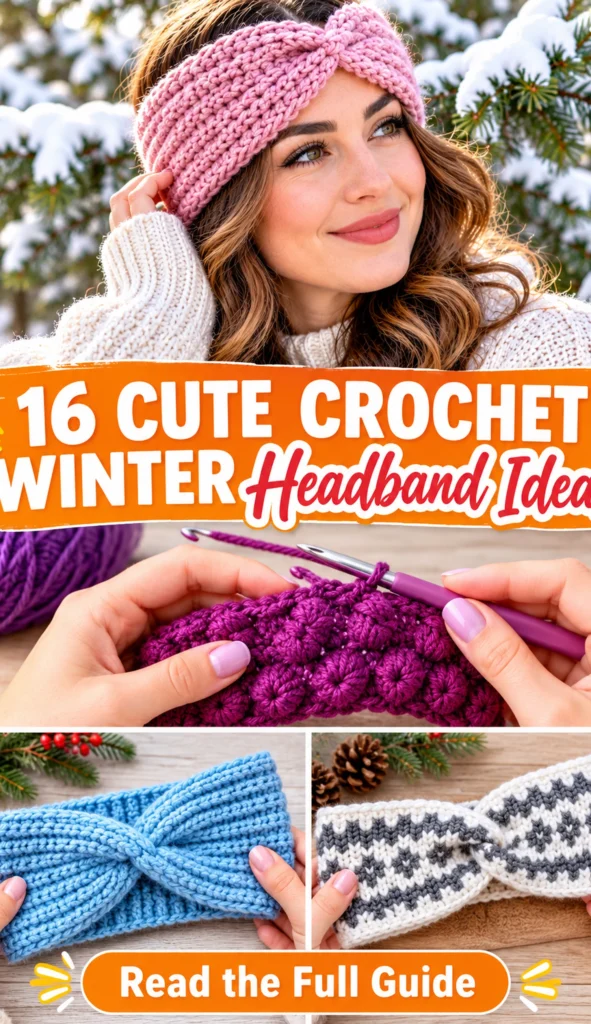
Winter is the perfect time to create cozy accessories that add a handmade style to a cold-weather wardrobe. A crochet headband is a practical project that allows you to experiment with different textures and colors while keeping ears protected from the chill.
Disclosure: This article was drafted with the help of AI tools. Images are AI-generated illustrations.
Choosing the right design depends on your current skill level and the look you want to achieve. Whether you prefer a thick, textured band or a lighter, more decorative style, selecting the right combination of yarn and stitch determines the final feel of your accessory.
Key Takeaways:
- Select yarn based on label recommendations for winter wear.
- Work a gauge swatch to ensure a proper fit.
- Use stretchy stitches for headwear to avoid tight fits.
- Follow yarn labels for washing and drying to prevent shrinkage.
- Keep baby headwear comfortably loose and never leave unattended.
- Quick Reference: Styles at a Glance
- What Yarn Works for Winter Headbands?
- How Do You Ensure a Proper Fit?
- 16 Cute Crochet Winter Headband Ideas
- 1. Icy Blue Ribbed Headband
- 2. Berry Red Puff Stitch Winter Band
- 3. Snow White Twist Headband
- 4. Snow White Winter Mesh Wrap
- 5. Tapestry Winter Motif Band
- 6. Shell Stitch Winter Band
- 7. Winter Tone Granny Square Band
- 8. Forest Green HDC Winter Band
- 9. Pale Gold DC Winter Band
- 10. Navy Blue Dense Winter Band
- 11. Frosty Cream Treble Wide Band
- 12. Taupe Seamed Winter Band
- 13. Olive Green Winter Joined Band
- 14. Burnt Orange Winter Texture Band
- 15. Bicolor Ribbed Winter Band
- 16. Oatmeal Textured Winter Wrap
- How Do I Care for My Winter Headbands?
- Common Beginner Mistakes
- How to Build Your Crochet Skills
- Frequently Asked Questions
- Final Thoughts on Winter Headbands
Quick Reference: Styles at a Glance
| Style | Look | Main technique | What to check |
|---|---|---|---|
| Icy Blue Ribbed Headband | Ridged | Back loop only | Row direction |
| Berry Red Puff Stitch Winter Band | Bumpy | Puff stitch | Yarn quantity |
| Snow White Twist Headband | Knotted | Visual style only | Join method |
| Snow White Winter Mesh Wrap | Openwork | Lace/mesh | Gap size |
| Tapestry Winter Motif Band | Patterned | Tapestry | Stretch level |
| Shell Stitch Winter Band | Scalloped | Shell stitch | Skipped stitches |
| Winter Tone Granny Square Band | Patchwork | Granny squares | Rigidity |
| Forest Green HDC Winter Band | Smooth | Visual style only | Stitch height |
| Pale Gold DC Winter Band | Lightweight | Visual style only | Drape |
| Navy Blue Dense Winter Band | Dense | Visual style only | Tension |
| Frosty Cream Treble Wide Band | Wide | Visual style only | Width management |
| Taupe Seamed Winter Band | Seamless | Visual style only | End weaving |
| Olive Green Winter Joined Band | Simple | Visual style only | Join ridge |
| Burnt Orange Winter Texture Band | Textured | Visual style only | Stitch height |
| Bicolor Ribbed Winter Band | Striped | Back loop only | Color changes |
| Oatmeal Textured Winter Wrap | Full coverage | Visual style only | Yarn amount |
What Yarn Works for Winter Headbands?
The fiber you choose affects how the headband feels and how it handles the winter elements. Different materials offer different properties regarding drape and care. All stitch names used in these descriptions follow standard US crochet terms.
At a Glance:
- Wool: Warm but can shrink in heat
- Acrylic: Easy-care and washable
- Bamboo: Soft and drapey
- Cotton: Breathable and less stretchy
Wool is a common choice for winter as it is warm, though it can felt or shrink if washed in hot water. Acrylic is widely washable and easy to care for, making it a practical choice for items worn frequently in the snow. For a softer feel, bamboo is drapey, while cotton is breathable but lacks the natural stretch of other fibers.
Always check the yarn label for the recommended hook size. You can adjust the hook size up or down to change the tension of your fabric.
Yarn Selection Tips:
- Check the label for fiber content
- Match the hook to the yarn weight
- Consider how the item will be washed
- Test a small sample for softness
Pro Tip: Lay finished winter items flat to dry to help them keep their original shape.
How Do You Ensure a Proper Fit?
Getting the size right is essential for comfort, especially for winter accessories that need to stay in place without being too tight. Since every person's head is different, measuring is the only way to ensure accuracy.
At a Glance:
- Measure above eyebrows and ears
- Work a gauge swatch first
- Keep baby items comfortably loose
- Adjust chain length based on swatch
To measure for a headband, wrap a measuring tape around the forehead, just above the eyebrows and ears. If you are making an item for a baby, ensure the fit is comfortably loose and never leaves red marks on the skin. For adults, measuring a well-fitting headband you already own is another reliable method.
Because crochet fabric varies by person, you must work a gauge swatch. This is a small test square in the pattern stitch that tells you how many stitches fit into a specific measurement. Use this swatch to determine your foundation chain length.
Safety Note: Baby headbands must never be worn while the baby sleeps or while they are unattended.
16 Cute Crochet Winter Headband Ideas
This list is organized by the techniques and visual features that define each style, ranging from simple solid bands to complex textured and joined designs.
1. Icy Blue Ribbed Headband
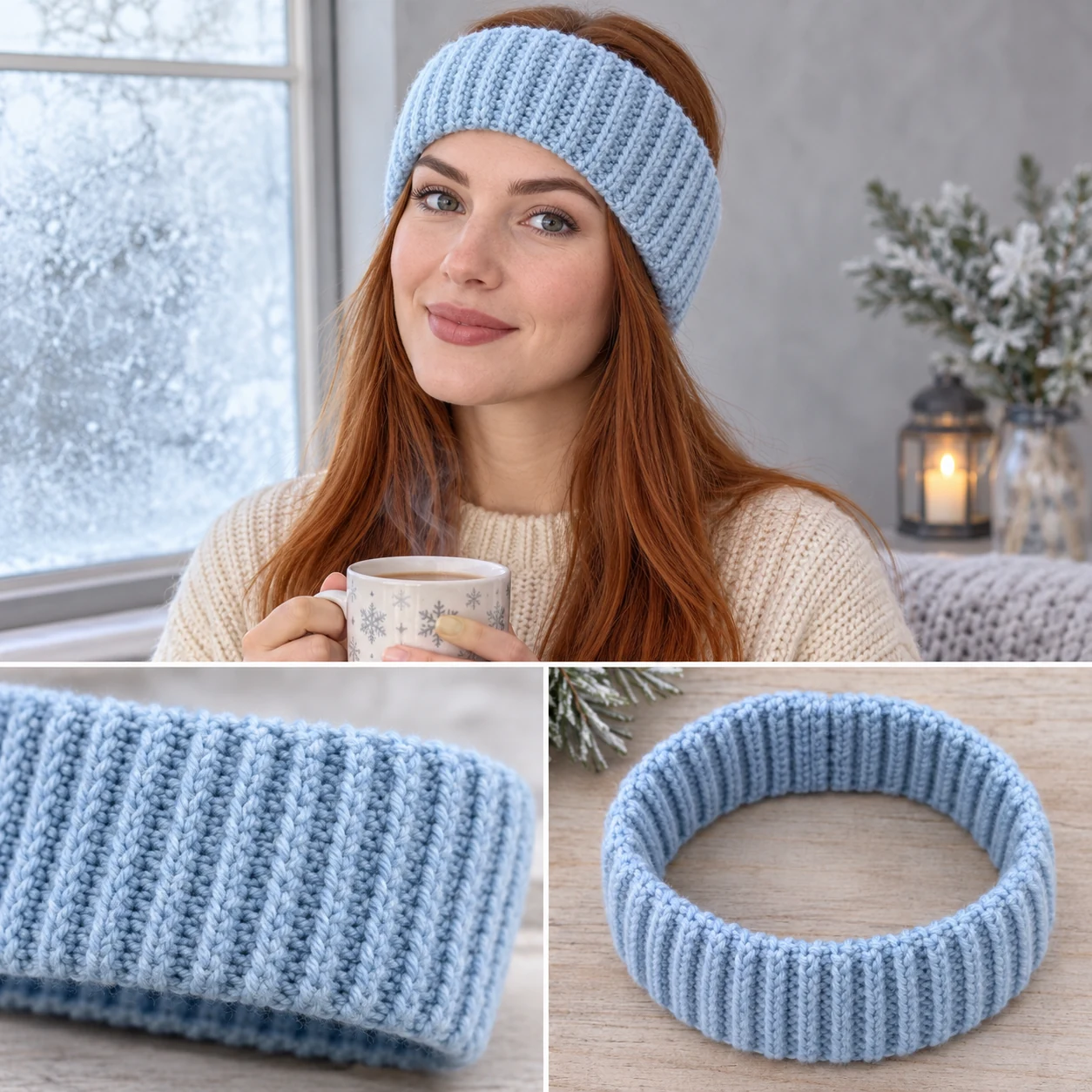
This design features a classic textured look in icy blue, evoking a frosted winter morning. The vertical ridges give it a professional appearance that mimics the look of knitted ribbing.
The back loop only (BLO) single crochet technique creates these raised ridges. This method results in a stretchy fabric where the stretch runs along the length of the row, making it easier to slide on and off.
Because the stretch is horizontal, the foundation chain serves as the length of the band. This allows you to adjust the size during the starting phase of the project based on your gauge swatch.
When choosing a pattern for this style, check if it is worked in rows or rounds. Row-based BLO bands are generally easier for beginners to manage and provide a more consistent ribbed effect.
Consider using a wool blend for this design to enhance the warmth. The ridged texture helps trap air, which can be beneficial for keeping ears warm during cold winter walks.
Construction Check:
- Verify foundation chain length
- Check row direction
- Confirm BLO placement
2. Berry Red Puff Stitch Winter Band
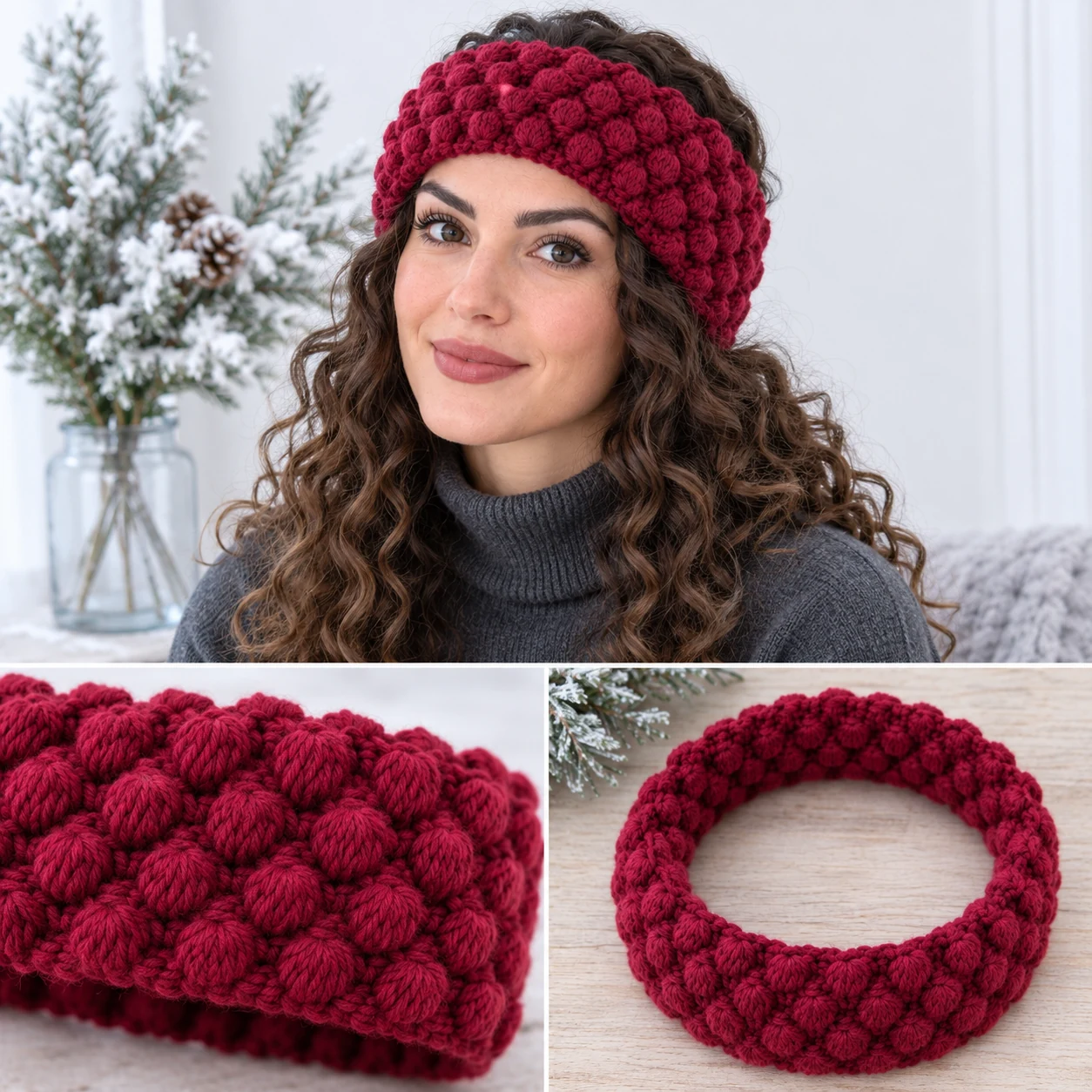
This headband is styled in deep berry red and is defined by its thick, three-dimensional texture. The surface is covered in small, raised bobbles that create a cozy, wintery feel.
The puff stitch is created by pulling up multiple loops in one stitch before closing them. This creates a bumpy, soft fabric that feels substantial and provides more coverage than flat stitches.
One important consideration is that puff stitches use more yarn than standard stitches. You may need more material than you would for a plain single crochet band to complete the project.
Beginners should pay close attention to the closing chain of the puff stitch. Forgetting this step can cause the puffs to lose their shape and flatten out over time.
Because of the thickness of the puff stitch, this band is naturally denser. Check your pattern to see if the width is adjusted to prevent the headband from becoming too bulky.
3. Snow White Twist Headband
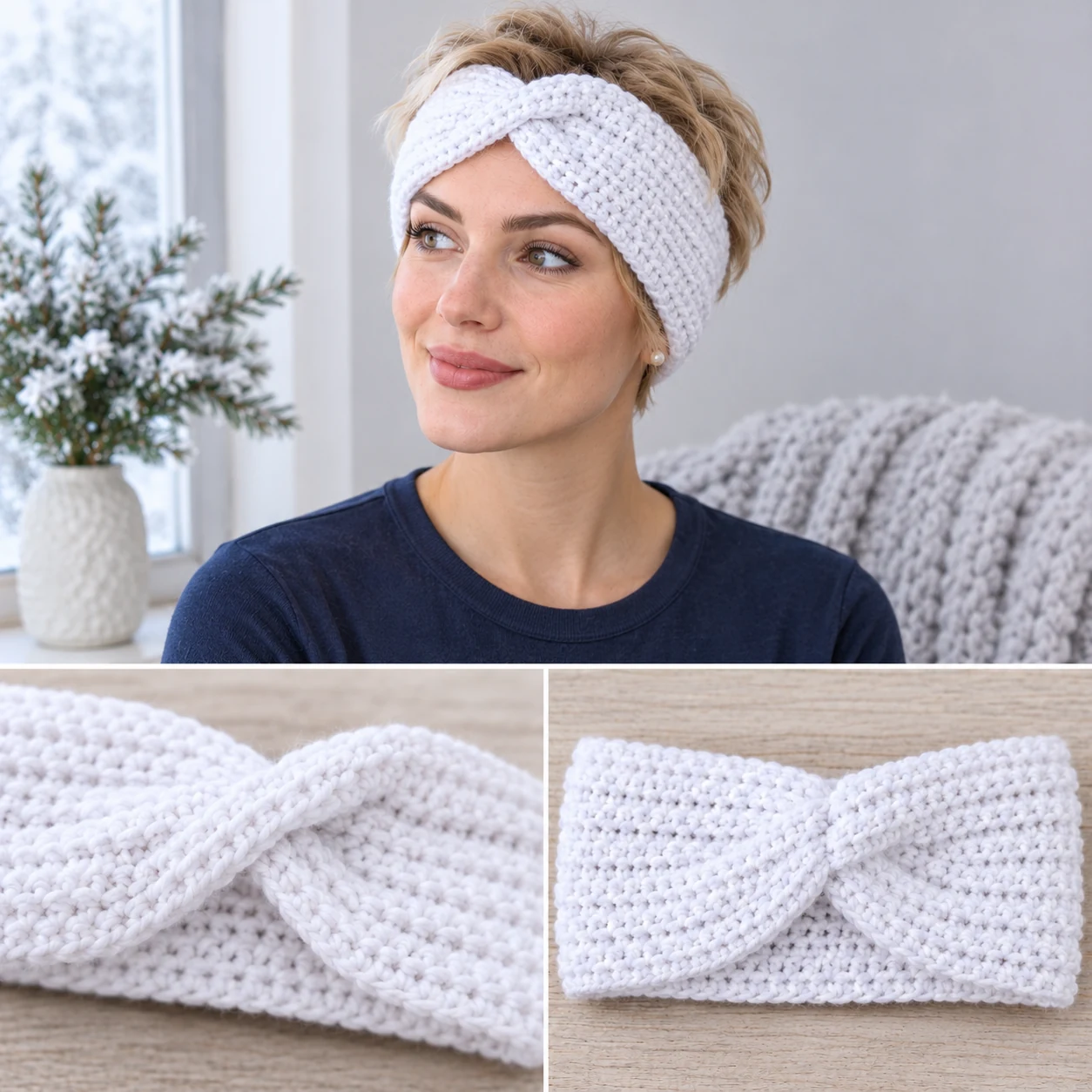
This accessory in snow white features a decorative knot-like detail at the center, resembling a fresh snowfall. It provides a modern silhouette that sits flat against the head.
The twist is not created by folding or special stitching during the process. Instead, a flat strip is worked first, then given one half twist in the middle before the ends are joined.
The final shape depends on the width of the flat strip. A wider strip creates a bolder twist, while a narrower strip looks more subtle and streamlined.
When joining the ends, a whip-stitched seam with a yarn needle is often used to keep the twist secure and the join tidy, preventing the knot from unraveling.
Since this design is worked as a flat strip, it is a great way to practice consistent stitch height before attempting the final assembly and joining.
Joining Tips:
- Ensure only one half twist
- Align edges before sewing
- Weave in all ends
4. Snow White Winter Mesh Wrap
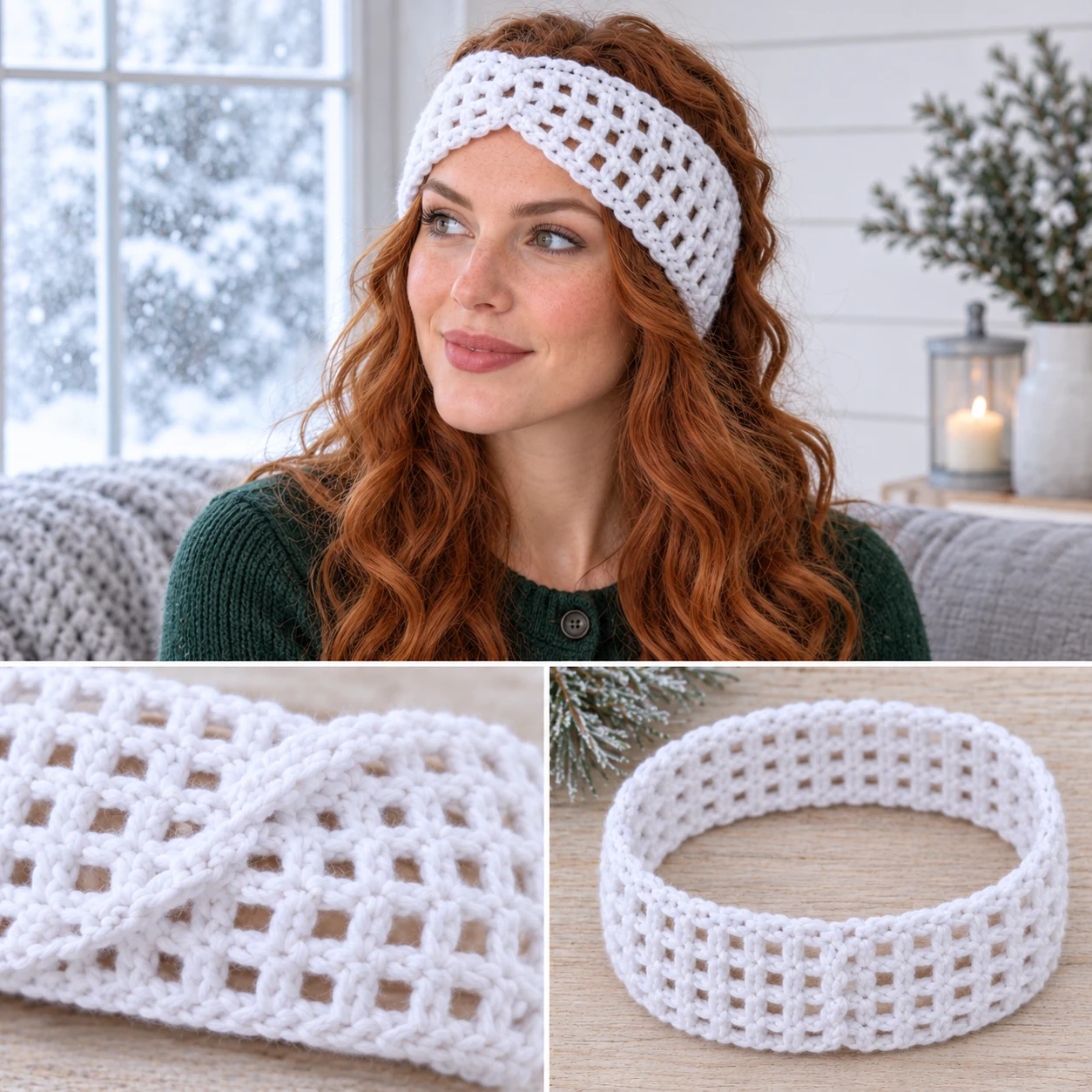
This delicate design in snow white uses an openwork pattern to create a light, decorative accessory. It is a suitable option for milder winter days or for layering under a heavier hood.
The lace effect is achieved by alternating double crochets with chain spaces and skipped stitches. This creates a mesh-like fabric with visible gaps that add a light, airy quality to the winter accessory.
It is important to keep the chain spaces consistent. If the spaces are too loose, the fabric can look sloppy and may catch small fingers or hair, which is a safety concern for children.
Because this style is less dense than a ribbed band, it is often paired with a thicker yarn to maintain a winter-appropriate feel while keeping the openwork look.
When choosing a pattern, check the size of the mesh gaps. Smaller gaps are generally more practical for winter wear as they provide slightly more protection than very wide openings.
Safety Note: Keep mesh gaps small to prevent little fingers from getting caught.
5. Tapestry Winter Motif Band
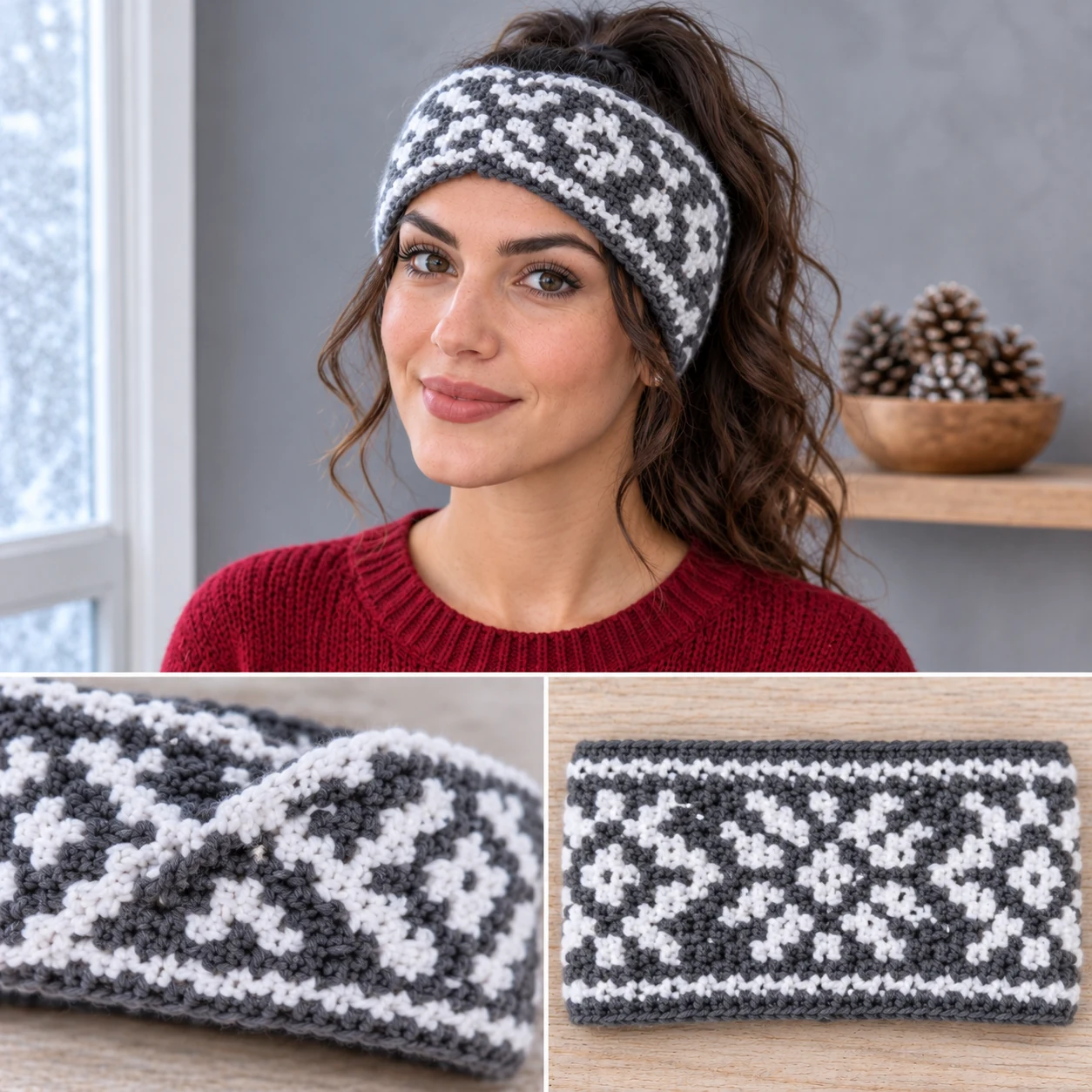
This headband features a geometric winter motif in soft charcoal gray and snow white. The two colors are integrated directly into the fabric to create a crisp, patterned look.
Tapestry crochet involves carrying the unused color inside the stitches as you work. This ensures that both colors are present in every row, creating a seamless transition between colors.
The result is a thicker, firmer fabric. However, this technique provides less stretch than a single-color project, which is an important factor for the final fit of the headband.
For those making this for babies, it is vital to keep the band comfortably loose. Since the fabric is firmer, careful measurement and a gauge swatch are required to avoid a tight fit.
When working with tapestry crochet, keep the carried yarn loose. If the carried strand is too tight, it can pull the stitches and distort the overall shape of the band.
Tapestry Tips:
- Keep carried yarn loose
- Check tension of both colors
- Measure wearer carefully
6. Shell Stitch Winter Band
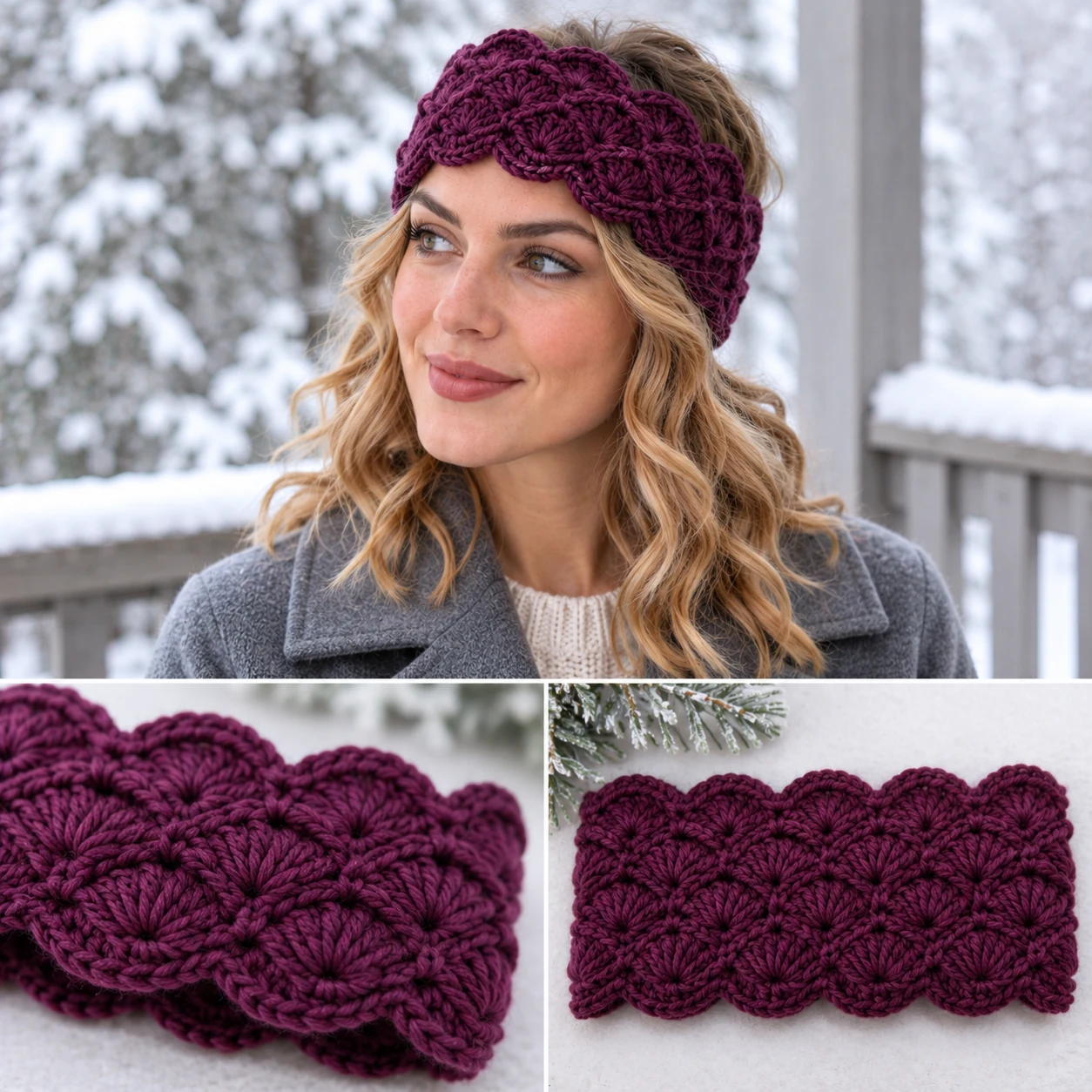
This design in deep plum features a scalloped edge that adds a decorative touch to winter outerwear. The repeating curves give the headband an ornate appearance that stands out against dark coats.
The shell stitch is made by working several double crochets into the same stitch or space. To keep the fabric flat, stitches are commonly skipped on each side, usually two stitches.
Unlike the puff stitch, which adds height, the shell stitch adds width and a wave-like texture to the fabric, creating a series of soft arcs across the band.
When selecting a pattern, check how many stitches are skipped. A shell is not created by skipping only one stitch, as this would not produce the characteristic curve.
This style works well with bamboo or acrylic yarns to emphasize the drape of the shells. Check the pattern to see if the shells are worked on one or both edges.
7. Winter Tone Granny Square Band
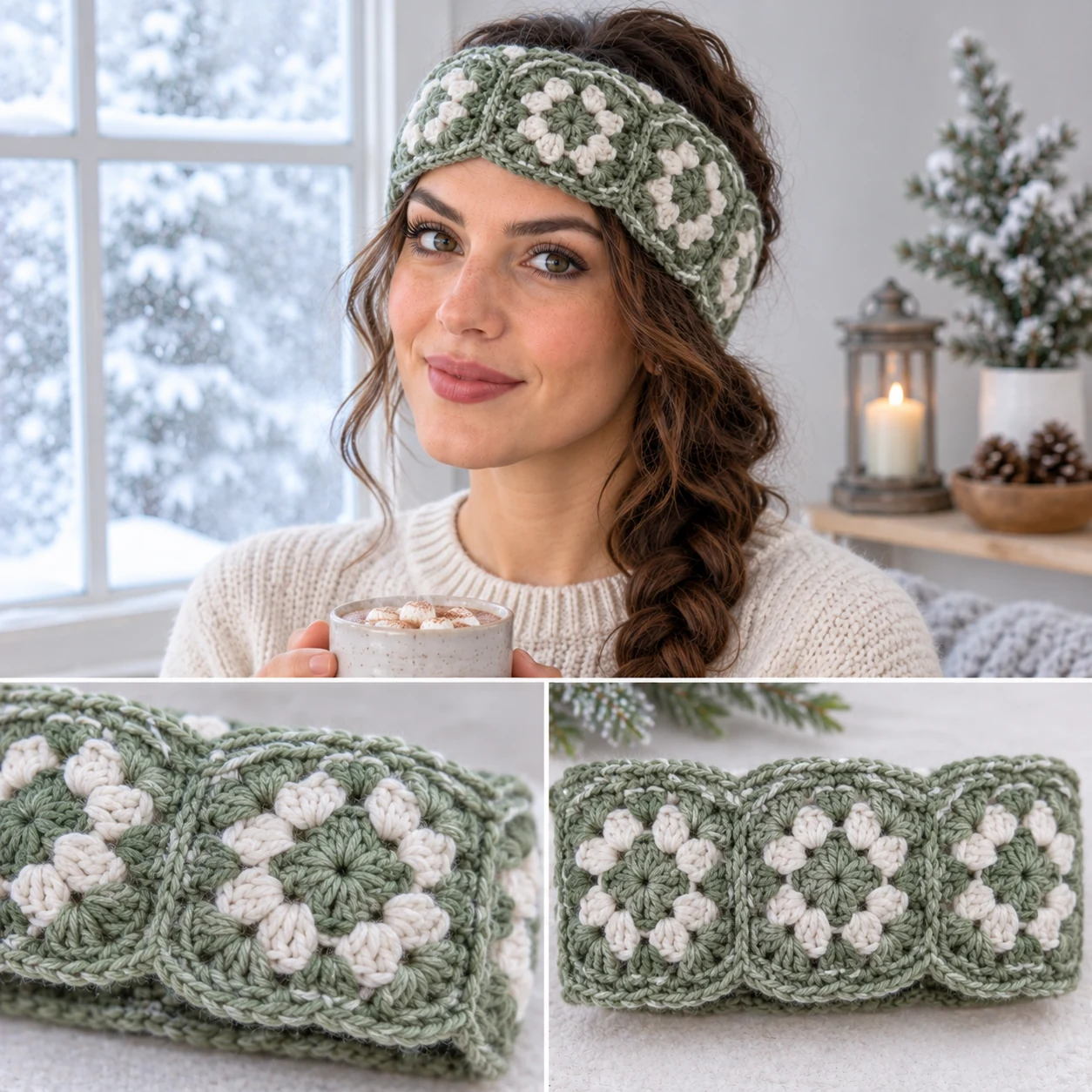
This headband uses a series of small squares in soft sage green and other winter tones. It has a vintage look and a chunky, eclectic feel suitable for cold weather.
The squares are worked in rounds from the center. Once the squares are finished, they are joined together to form a long strip that wraps around the head.
Joining can be done using a slip stitch join or by sewing them together with a yarn needle. A slip stitch join will leave a small ridge between squares, adding to the texture.
Because joined squares create a rigid construction with little stretch, this style is not recommended for baby headwear where flexibility is essential for comfort.
To ensure a professional finish, make sure each square is the same size. Use a gauge swatch for the first square to ensure the final band length is accurate.
Joining Options:
- Slip stitch for a ridge
- Sewing for a flatter seam
- Consistent square size
8. Forest Green HDC Winter Band
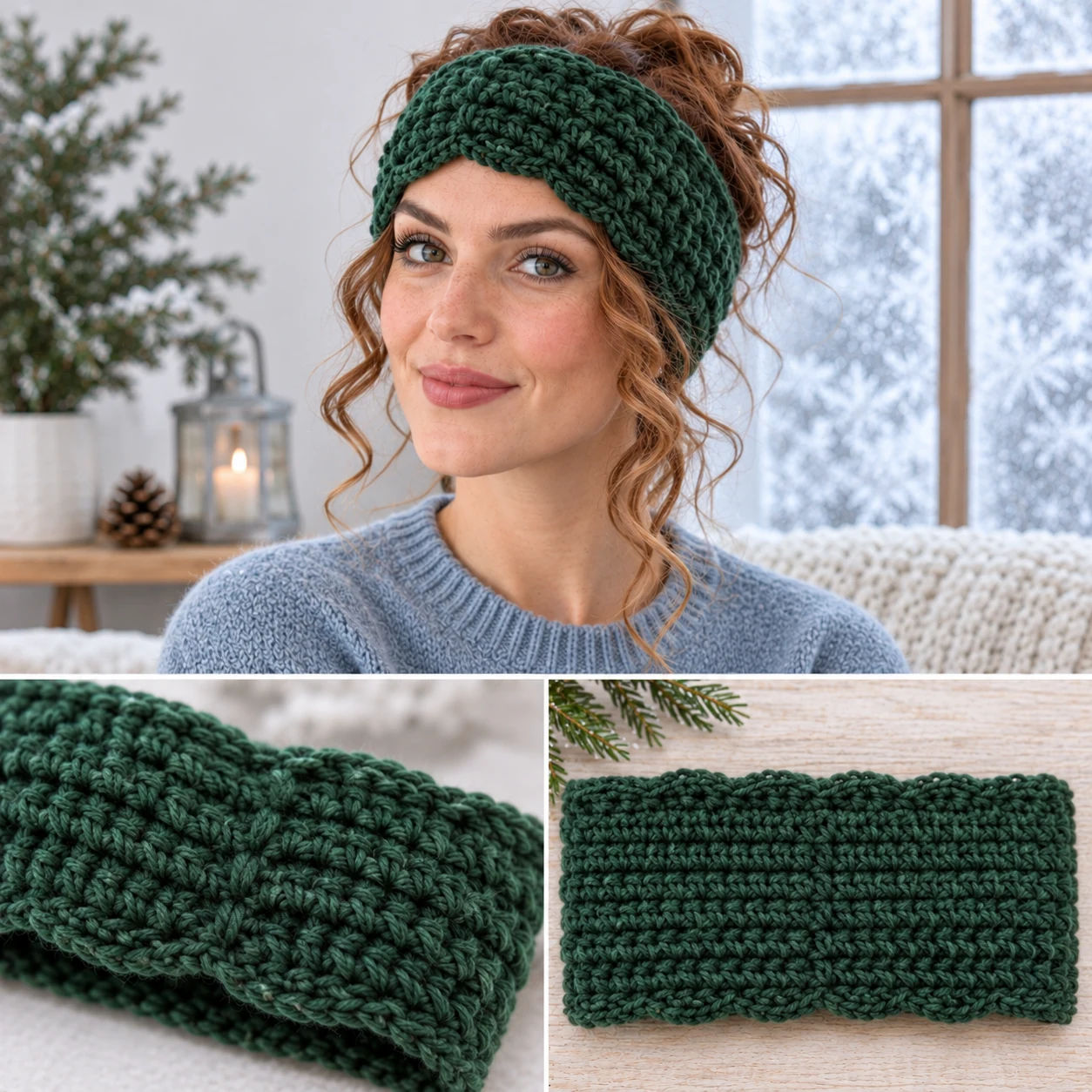
This headband in forest green has a smooth, dense texture. It is a great choice for those who want a simple, clean look that pairs well with winter outerwear.
The half double crochet is a mid-height stitch. It is taller than a single crochet but shorter than a double crochet, providing a balanced fabric that is neither too thin nor too bulky.
This stitch creates a consistent surface that is less prone to gaps than taller stitches, making it a reliable choice for keeping the cold air out during winter.
This is a stable stitch that works well with acrylic yarns, which are easy to wash after a winter of wear. The fabric maintains its shape well over time.
When working this design, focus on maintaining a consistent tension. Because the stitch is mid-height, any variation in tension is easily visible in the final band.
9. Pale Gold DC Winter Band
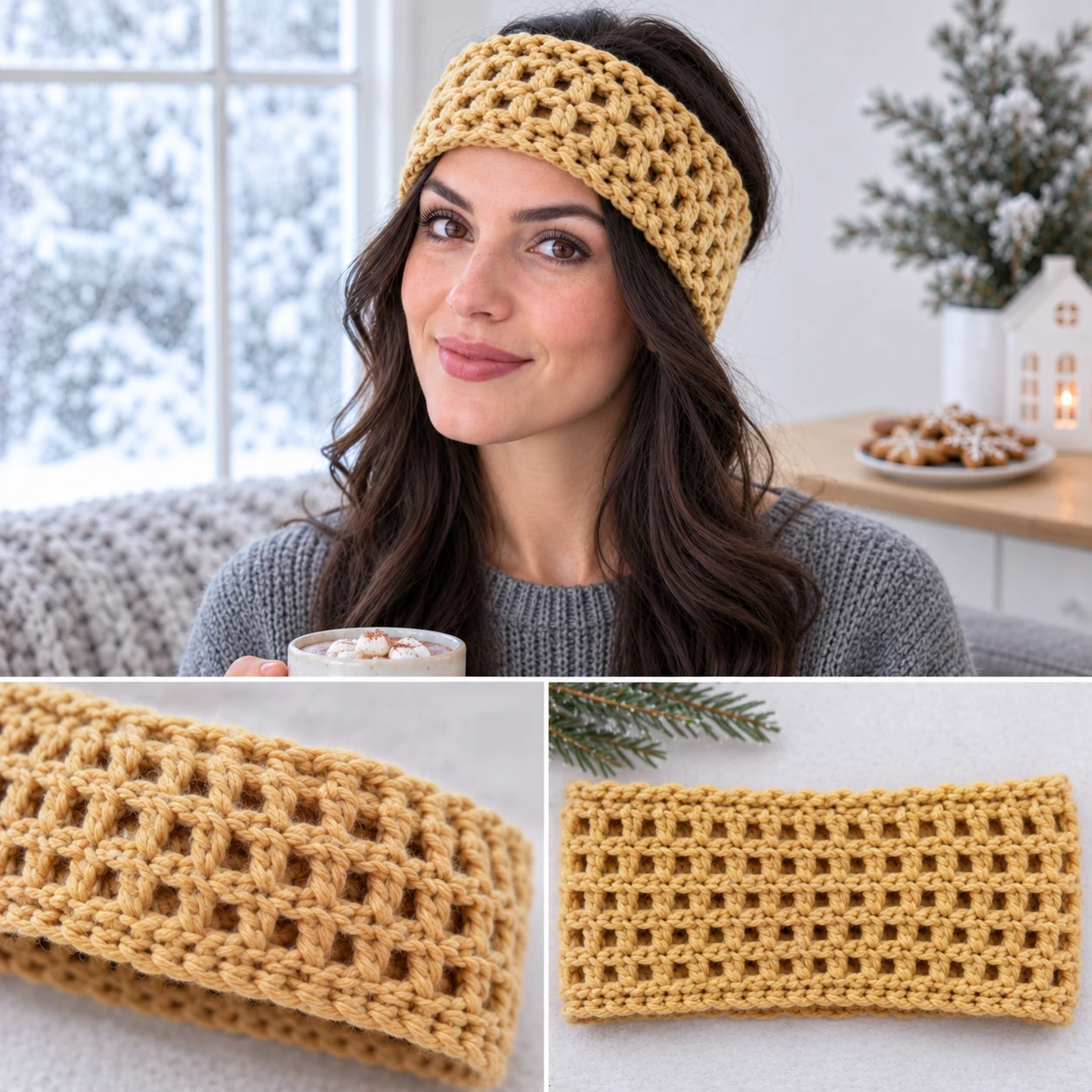
This headband in pale gold is slightly more flexible and open than a solid band. It is an efficient project for beginners who want a quick winter accessory.
The double crochet stitch creates a fabric that is faster to work up than single crochet. It provides more height per row, allowing the band to grow quickly.
Because this stitch is taller, the fabric may have more drape. This can be adjusted by changing the hook size to make the fabric tighter or looser.
This style is often used for lighter winter wraps that are meant to be layered under a hood or hat. The openness makes it less bulky than a ribbed design.
Check your pattern for the recommended hook size. Using a hook that is too large can make the double crochet stitches too loose, reducing the overall warmth.
10. Navy Blue Dense Winter Band
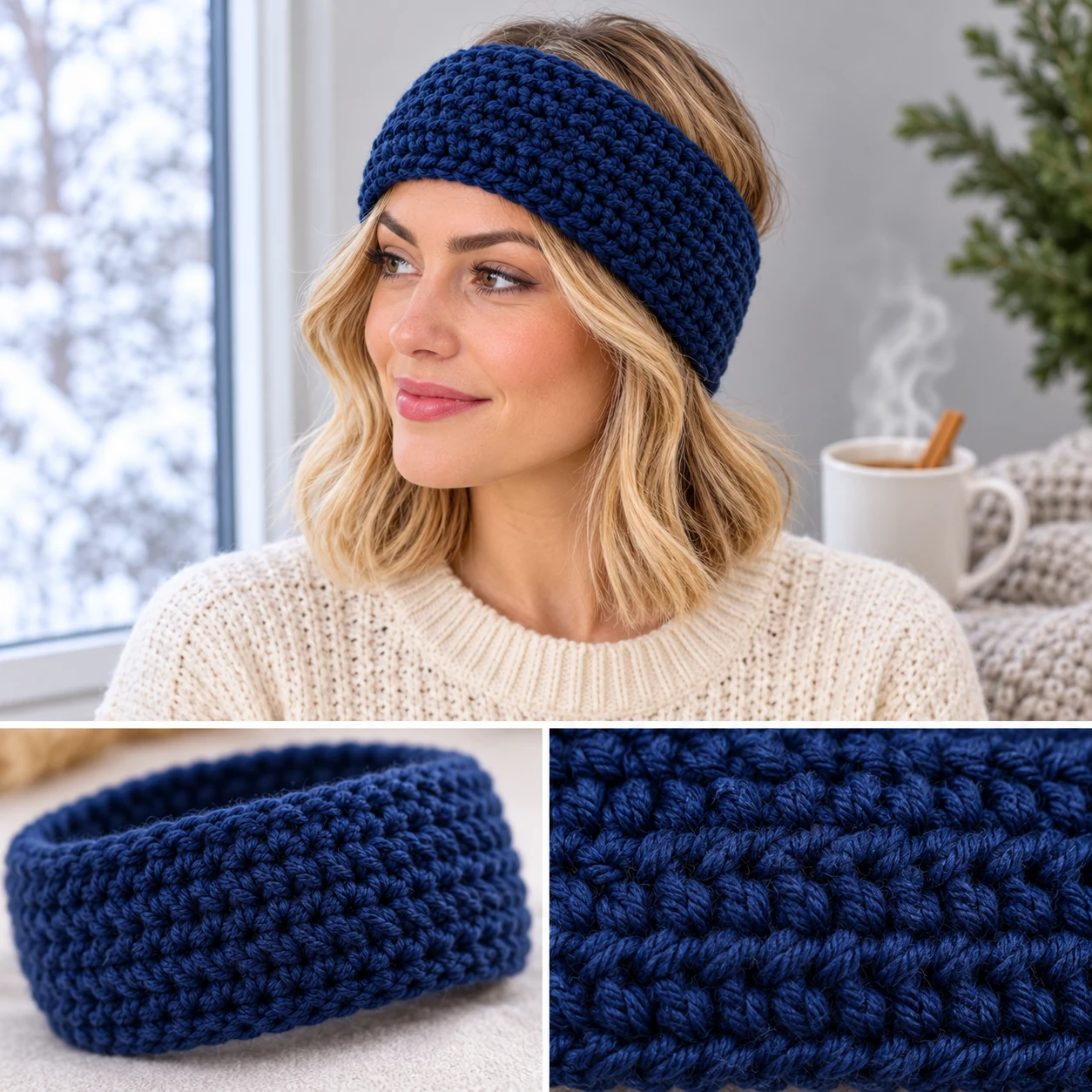
This navy blue headband is the densest of all the options. It creates a thick barrier against the cold air, making it suitable for the coldest winter days.
The single crochet stitch produces a tight, sturdy fabric. This density provides maximum coverage and minimizes the amount of wind that can pass through the stitches.
Due to the density, this style has the least amount of natural drape. It holds its shape very well over time and does not stretch as much as taller stitches.
This is often the best starting point for a beginner to practice consistent tension before trying more complex stitches or textures.
Because the fabric is so thick, consider using a softer yarn like bamboo or a wool blend to ensure the band remains comfortable against the skin.
Beginner Check:
- Maintain even tension
- Check stitch height
- Verify end joins
11. Frosty Cream Treble Wide Band
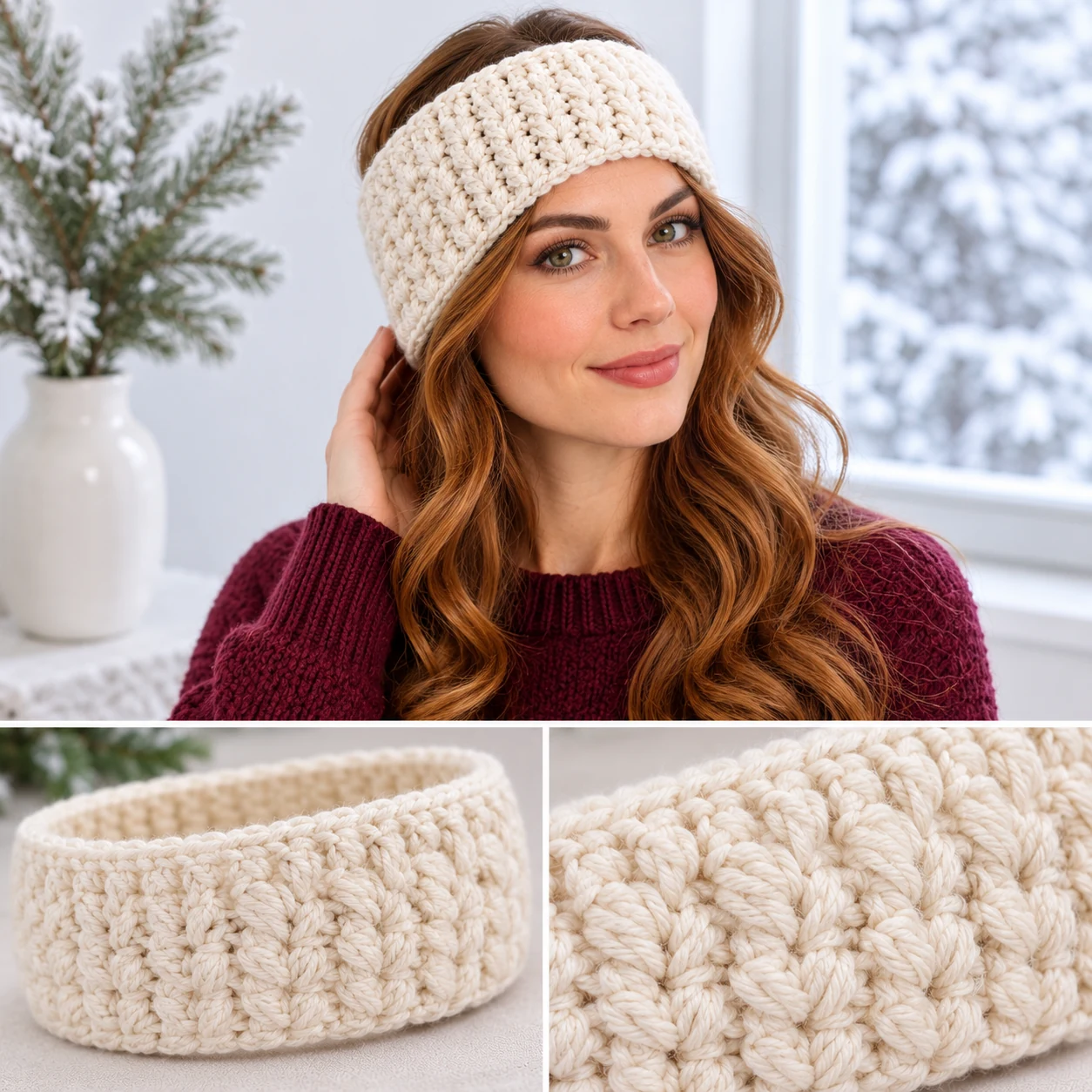
This wide headband in frosty cream covers more of the ears and forehead. It is a bold accessory for very cold days when extra coverage is needed.
The treble crochet is a tall stitch that allows the band to grow in width quickly. This makes it an efficient choice for creating a wide wrap without excessive rows.
Because the stitches are so tall, the fabric can be more flexible. This makes it a good option when using non-stretchy cotton blends that need more movement.
Check your pattern for how the width is managed to ensure the band does not become too floppy. A wider band may require a firmer tension to stay in place.
This style is particularly effective in light colors like cream, which highlight the height and structure of the treble crochet stitches.
12. Taupe Seamed Winter Band
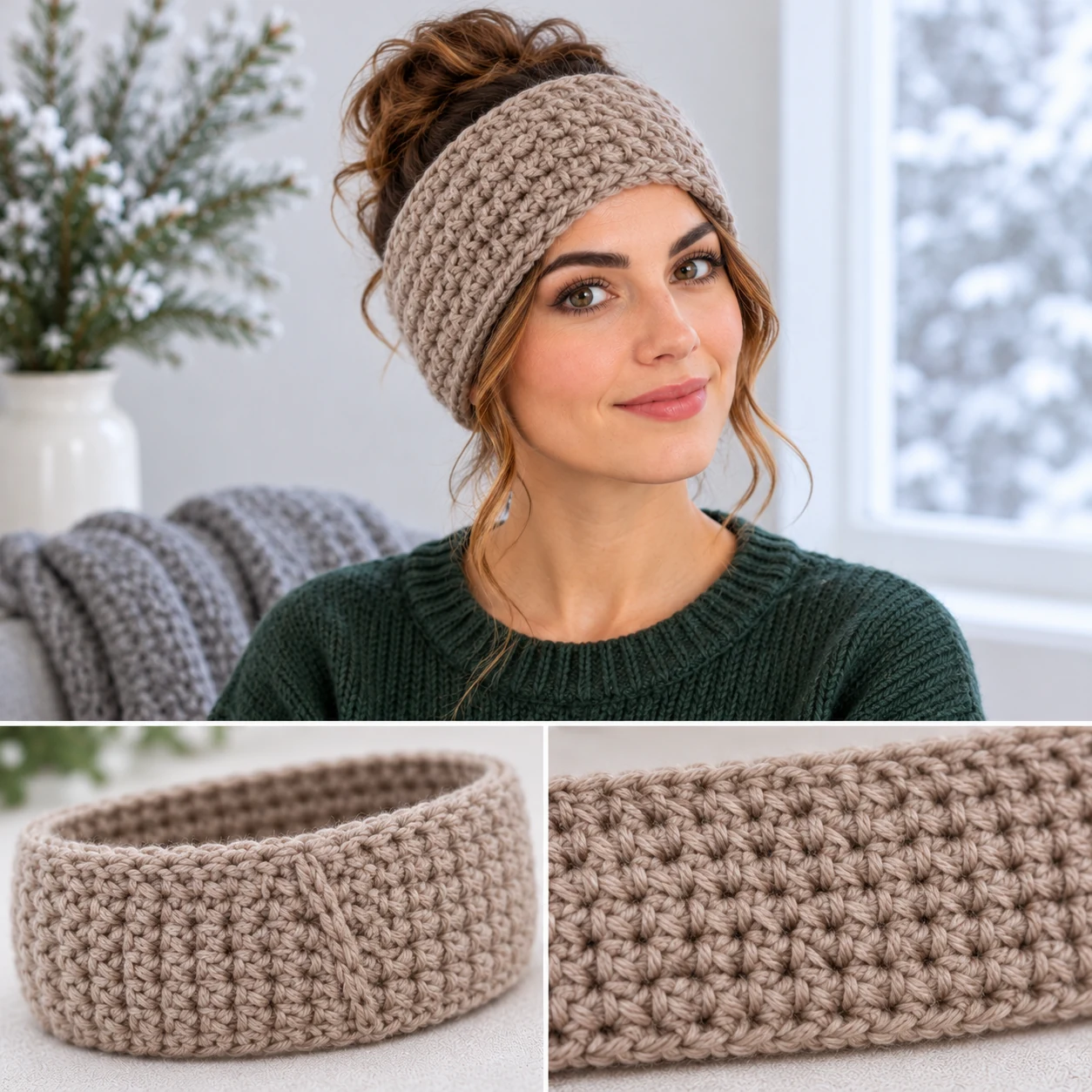
This headband in soft taupe is focused on a clean finish. It is a simple strip joined into a seamless-looking ring for a polished winter look.
The join is created using a whip-stitch with a yarn needle. This involves sewing the two short ends together with a series of slanted stitches through the edges.
Unlike a slip stitch join, which leaves a visible ridge, a whip-stitched seam can be more discreet if the tension is kept even and the stitches are small.
Every end must be woven in for several stitches, back and forth, to ensure the seam does not unravel during wear or after washing.
This method of joining is ideal for thicker fabrics where a slip stitch might create a bulky lump. It allows for a flatter, more comfortable fit against the head.
Finishing Steps:
- Use a blunt yarn needle
- Keep seam tension consistent
- Weave in ends thoroughly
13. Olive Green Winter Joined Band
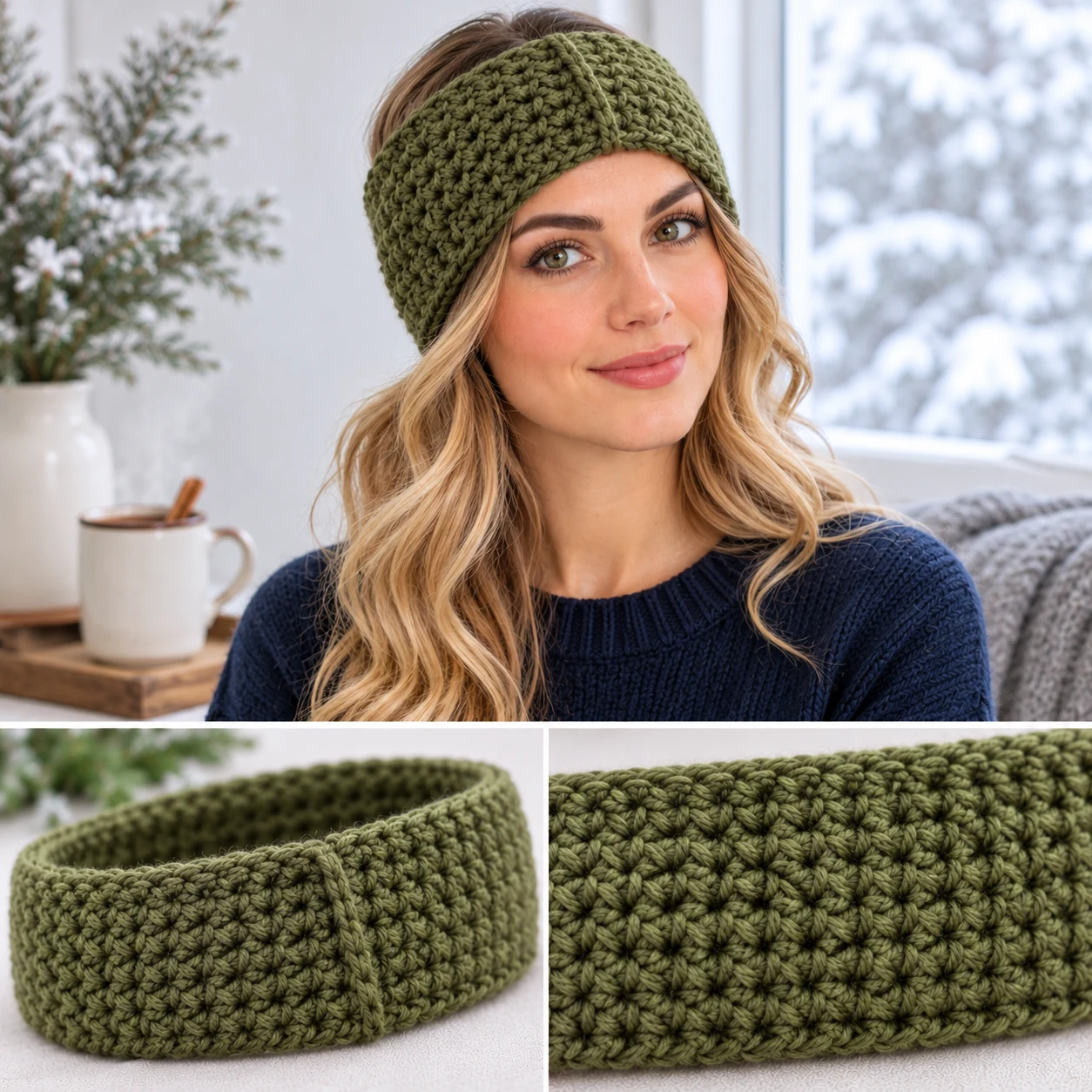
This olive green headband uses a quick method for closing the circle. It is a practical design for a fast project that provides basic winter warmth.
The ends are joined using a slip stitch. This is a fast way to connect the foundation chain to the final stitch of the project without needing a needle.
A slip stitch join leaves a small, visible ridge where the ends meet. This is a normal characteristic of the technique and adds a slight detail to the join.
To make the join look tidier, ensure the slip stitch is not pulled too tight, which can cause the fabric to pucker or create a gap.
This joining method is best for bands with a consistent stitch height. If the band is very wide, a seamed join may be more stable.
14. Burnt Orange Winter Texture Band
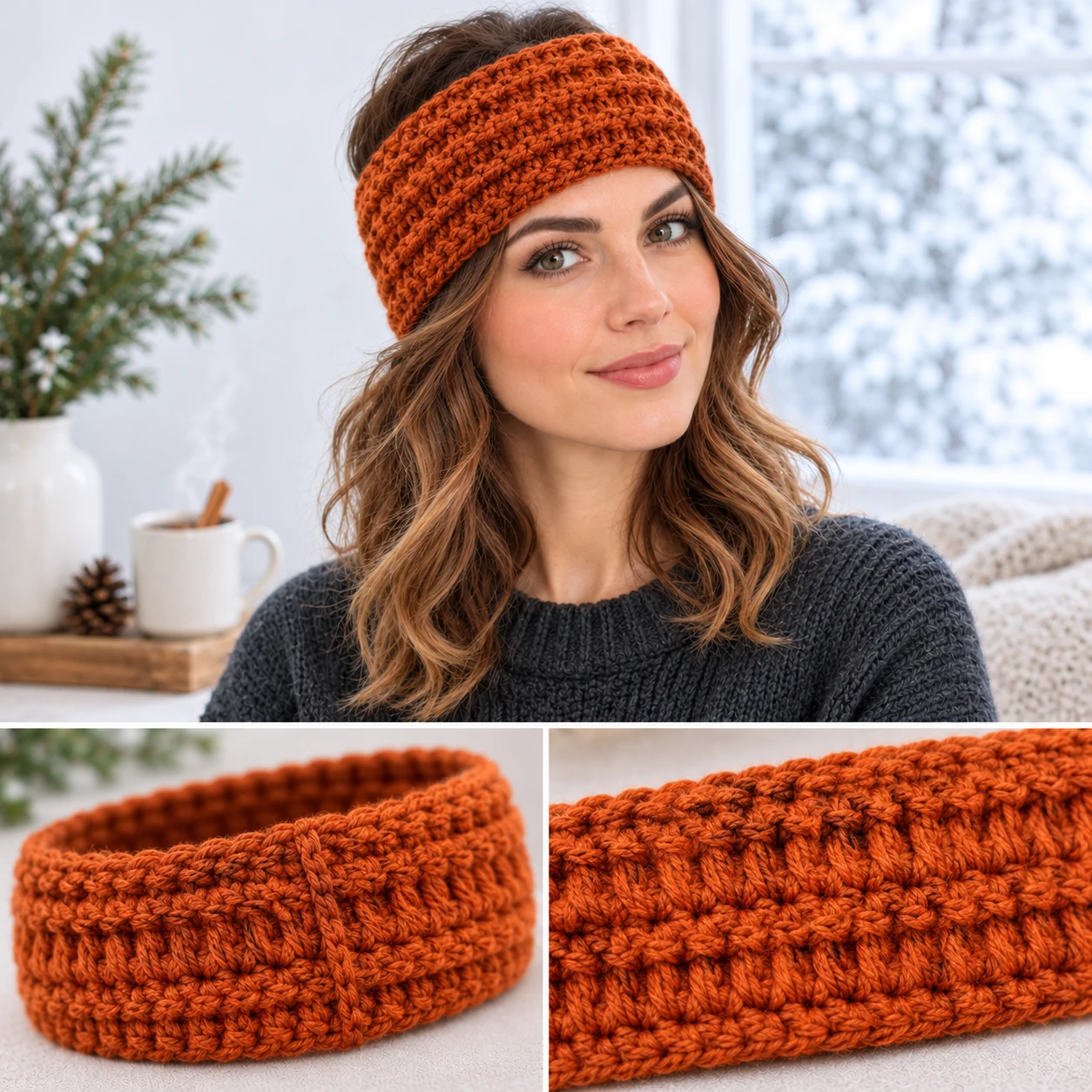
This headband in burnt orange combines different heights of stitches to create a winter-ready look. It creates a striped, architectural appearance that adds visual interest to winter outfits.
By alternating between single crochet and double crochet, you can create varying levels of density and stretch across the band.
This style is a great way to practice transitioning between different stitch heights in one piece, helping you learn how to maintain a straight edge.
Check the pattern to see if the texture is created in rows or if it is a variegated stitch pattern. Row-based textures often provide more consistent stretch.
The contrast in stitch height creates a fabric that is more breathable than a solid single crochet band but denser than a full double crochet design.
Skill Practice:
- Practice turning chains
- Watch stitch height changes
- Maintain consistent tension
15. Bicolor Ribbed Winter Band
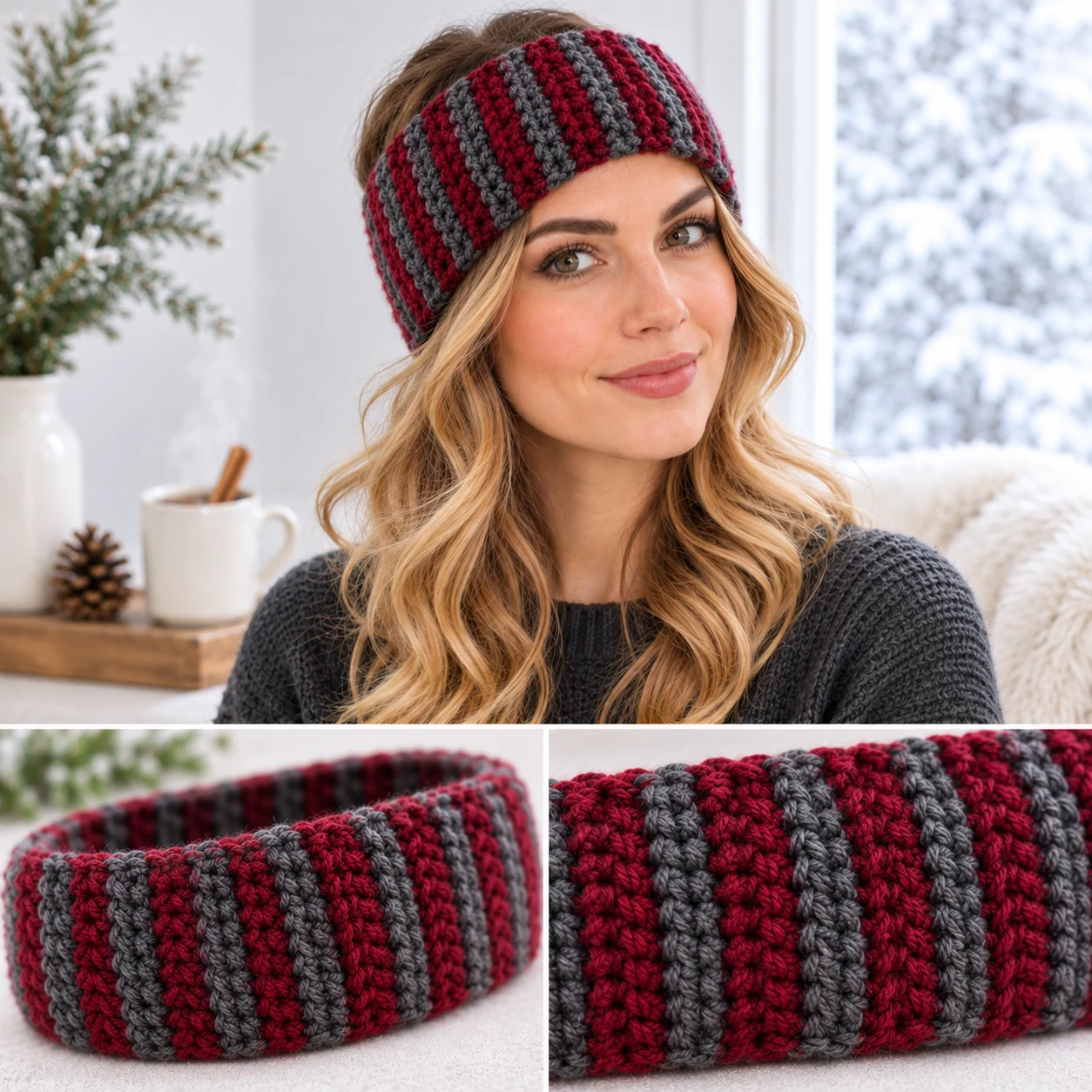
This design in deep berry red and soft charcoal gray features alternating colored ridges. It has a sporty, winter-ready appearance that is visually striking.
The ribbing is created using the back loop only technique. The color changes occur at the end of each row or section to create the striped effect.
Because it uses BLO, the band remains stretchy. The color changes add a visual element without sacrificing the flexibility of the ribbing.
When changing colors, ensure the new yarn is pulled through the last loop of the previous color to keep the transition clean and avoid gaps.
This style is an excellent way to practice color management. Using contrasting winter tones makes the ridged texture more prominent and defined.
16. Oatmeal Textured Winter Wrap
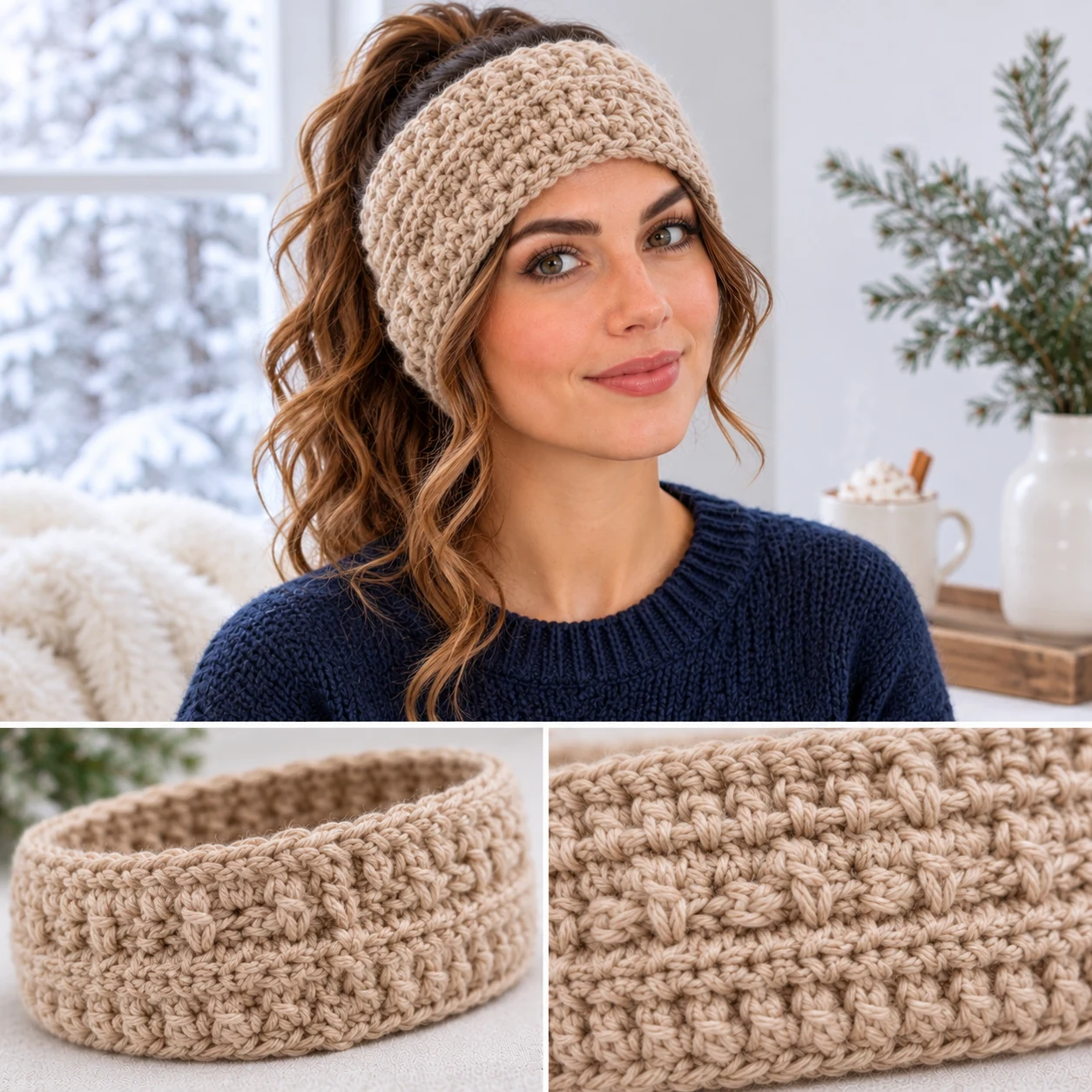
This wide wrap in oatmeal is designed to cover the ears and the nape of the neck. It is a substantial piece of winter wear for extreme cold.
The texture is created by mixing a variety of standard US stitches. This results in a fabric that is thicker and more insulating than a basic band.
Using a larger hook with a thicker yarn can help the wide band stay soft rather than becoming too stiff, which ensures it contours to the head.
Because of the size, it is important to check the yarn quantity on the label to ensure you have enough for the full width and length.
This wrap style is often worked as a wide rectangle and then joined. Check your pattern for the best joining method to avoid a bulky seam at the back.
Final Checks:
- Verify yarn yardage
- Check width measurement
- Ensure comfortable fit
How Do I Care for My Winter Headbands?
Proper care ensures that your handmade accessories last through many winter seasons. The most important rule is to always follow the instructions on the yarn label.
At a Glance:
- Follow the yarn label first
- Lay flat to dry
- Avoid high heat
- Check for loose threads
Avoid using very hot water or high dryer heat, as these can shrink wool and cotton or damage acrylic fibers. To maintain the shape of the headband, especially those with twists or ribbing, lay the item flat to dry.
Regularly check the finished item for loose threads or snagged hair. If any threads come loose, weave them back into the fabric immediately with a yarn needle.
Common Beginner Mistakes
Many beginners encounter the same hurdles when starting their first winter headband. Recognizing these early can help you achieve a more professional finish.
At a Glance:
- Inconsistent stitch tension
- Forgetting to work a swatch
- Poorly secured ends
- Incorrect turning chain height
One common issue is inconsistent tension, which can make the headband look uneven. Working a swatch helps you find a rhythm before starting the actual project.
Another mistake is forgetting to weave in ends securely. Ends that are not woven back and forth for several stitches can easily pull out during wear.
- Pulling the slip stitch too tight
- Ignoring the yarn label's hook size
- Measuring without accounting for stretch
- Skipping the closing chain on puff stitches
How to Build Your Crochet Skills
Starting with a simple project like a headband is an excellent way to build confidence. Once you master the basic stitches, you can move on to more complex textures.
At a Glance:
- Start with basic stitches
- Experiment with texture
- Use tested patterns for counts
- Practice different joins
Try moving from a solid single crochet band to a ribbed BLO band to learn how stitch placement affects stretch. From there, experiment with puff stitches or shell stitches to add dimension.
This guide is an overview of styles and techniques. For exact stitch counts, sizing, and step-by-step instructions, you should always follow a complete, tested pattern.
Frequently Asked Questions
Which yarn is best for a stretchy headband?
Acrylic and wool generally offer more stretch than cotton. Using stitches like back loop only single crochet will further increase the stretch of the fabric.
How do I stop my headband from being too tight?
Measure the wearer's head and work a gauge swatch first. Make stretchy bands slightly smaller than the measurement, but keep baby items comfortably loose.
What should I do if the headband is too loose?
You can try using a smaller hook size than recommended on the yarn label. This creates a denser fabric with smaller stitches.
Is it safe for babies to wear crochet headbands?
They are safe if they fit comfortably loose and do not leave marks. However, they must never be worn during sleep or while the baby is unattended.
How do I hide the join at the ends?
A whip-stitched seam with a yarn needle is often more discreet than a slip stitch join. Always weave in your ends back and forth for several stitches.
Why does my puff stitch not look bumpy?
Ensure you are pulling up several loops in the same stitch and using a closing chain. If the tension is too loose, the puff will flatten.
Final Thoughts on Winter Headbands
Creating your own winter headbands is a rewarding way to practice crochet while making something useful. By choosing the right yarn and stitch, you can create accessories that match any winter outfit.
Remember to prioritize safety and comfort, especially when making items for babies. Keep the fit comfortably loose and always supervise young children while they wear their headwear.
With a bit of practice and a good gauge swatch, you can ensure every headband you make is a cozy success.